
Medical Device Motor Validation and Compliance Testing
Introduction
A single nonconformity found late in a medical device program can delay a launch by months and add six figures in rework and re-testing. A motor that drives an infusion pump, a surgical tool, or a ventilator carries that risk directly, because patient safety rides on how it performs. So the question is not only “does the motor work”, but “can you prove it works, every time, on paper a regulator will accept”.
This guide shows you how to validate a motor for a medical device and what your test setup needs for compliance. We focus on traceability, documentation, and the metrics auditors look for, so your bench becomes a source of evidence, not just a place to spin a motor.
Why Medical Motor Validation Is Different
In most industries, motor testing answers a performance question. In medical devices, it answers a safety question first, and the bar is higher. Validation here means showing, with recorded evidence, that the motor meets its requirements across its full operating range and over its service life.
Three things set medical apart. First, reliability is non-negotiable, because a failure can harm a patient, so margins and failure modes matter more than a typical spec sheet. Second, traceability is mandatory: every result must link back to a calibrated instrument, a known configuration, and a time stamp. Third, documentation is part of the product, not an afterthought, because your design history file has to survive an audit. Add a controlled, repeatable test environment, and you have the core of medical validation.
For background on where these motors are used, see our overview of electric motors in medical devices.
Takeaway: medical validation is testing plus proof, and the proof has to hold up under audit.
The Compliance Angle
Compliance is where good engineering meets the paper trail. The motor can be excellent, but if you cannot show the evidence in the form a regulator expects, the work does not count.
Standards and Documentation Expectations
Medical electrical equipment is generally framed by IEC 60601-1, the base safety standard, with collateral and particular standards for specific device types. Around it sits ISO 14971, the standard for risk management, which asks you to identify hazards, estimate risk, and show that your controls work. Quality systems usually follow ISO 13485.
Your testing does not certify the motor on its own. It produces the evidence those frameworks need. In practice, that means your tests should demonstrate that the motor:
- stays within spec for torque, speed, and current across the operating range,
- behaves safely at its limits and under fault conditions tied to your risk analysis,
- holds up over the expected service life, and
- does all of the above with results you can reproduce and trace.
A quick honesty note: standards apply to the finished device and its intended use, not to a component in isolation. Treat the bench as the tool that generates objective evidence for your file, and let your regulatory team map that evidence to the right clauses.
Traceability and Test Reports
Traceability is the backbone of a medical test report. A result is only trustworthy if you can answer three questions about it: which instrument measured it, was that instrument calibrated, and what exact configuration produced the number.
A bench built for this records all of it. You want time-stamped data logs, the instrument calibration status attached to each run, the firmware and setup parameters captured, and an audit trail of who ran what and when. The report should be exportable and human-readable, so a reviewer can follow it without your help.
Takeaway: if a number is not traceable to a calibrated instrument and a known setup, it is not evidence.
What to Validate
Validation is not one test. It is a set of checks that together show the motor is safe and fit for use. Here is what each one covers and why it matters for a medical device.
| What to validate | What you measure | Why it matters |
|---|---|---|
| Performance within spec | Torque, speed, current vs. target across range | Confirms the motor meets its requirements where the device uses it |
| Noise, vibration, EMC | Acoustic noise, vibration, emissions/immunity context | Affects patient comfort, device function, and co-located equipment |
| Reliability and lifetime | Behavior over hours, cycles, and thermal load | Shows the motor survives its intended service life |
Performance Within Spec
Start with the basics done rigorously. Drive the motor through its real operating points and confirm torque, speed, and current stay within the limits your design requires. Map the full range, not just the rated point, because medical devices often use the motor at low speed and partial load where ripple and accuracy matter most. Record the curves, not a single pass/fail flag, so the evidence shows margin.
Noise, Vibration and EMC Considerations
In a clinical setting, a noisy motor is more than an annoyance. Acoustic noise affects patient comfort and can mask alarms. Vibration can disturb a procedure or wear mechanics over time. And electromagnetic behavior matters, because medical equipment shares space with other sensitive devices, so EMC is part of the safety picture. Smooth current control, like field-oriented control, generally reduces torque ripple and the noise and vibration that come with it. The bench should let you capture these characteristics under controlled load, even when formal EMC testing happens in a dedicated lab.
Reliability and Lifetime
A medical motor must survive its service life with margin. That means endurance under realistic duty cycles and thermal load, not a short bench check. Plan runs that hold steady operating points for hours and cycle through the conditions the device actually sees. The detailed method for endurance and thermal planning is a topic of its own, so treat this section as the why, and build the full plan separately.
Takeaway: validate the full range, the quiet behavior, and the long run, because medical use stresses all three.
Setting Up a Validation Bench
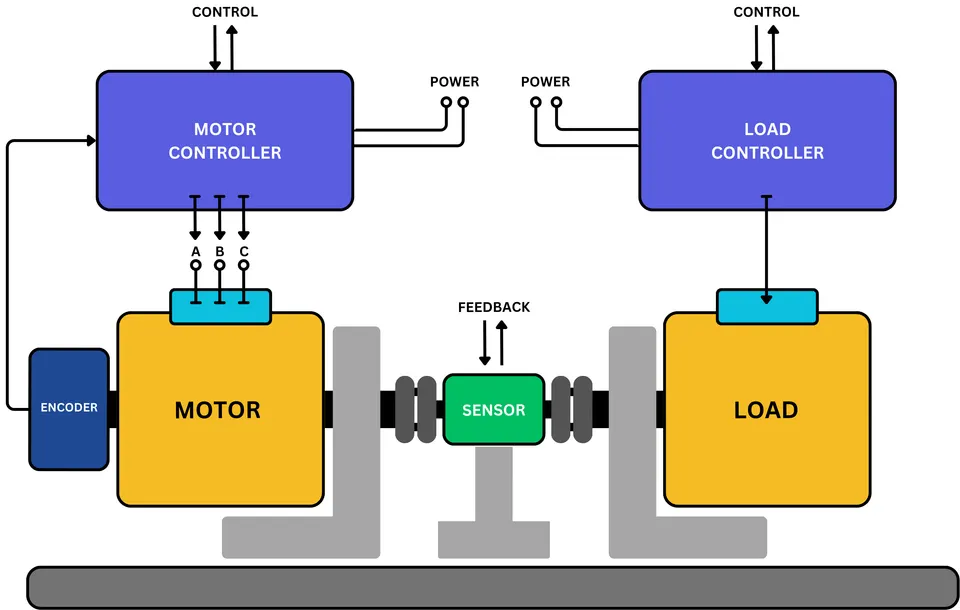
A validation bench has one job that a normal bench does not: it must produce repeatable evidence an auditor will accept. That shapes every choice.
Begin with controlled, repeatable loading so each run reproduces the same conditions. The type of load you pick, active dyno, brake, or hysteresis, depends on your tests, and that selection deserves its own attention. Whatever you choose, the load must be stable and logged.
Next, get the sensors and calibration right, because traceability lives here. You need a torque sensor sized to your smallest torque, not just your largest, plus accurate speed, current, voltage, and temperature sensing. Each sensor needs a current calibration certificate, and the bench should record that calibration status with every run.
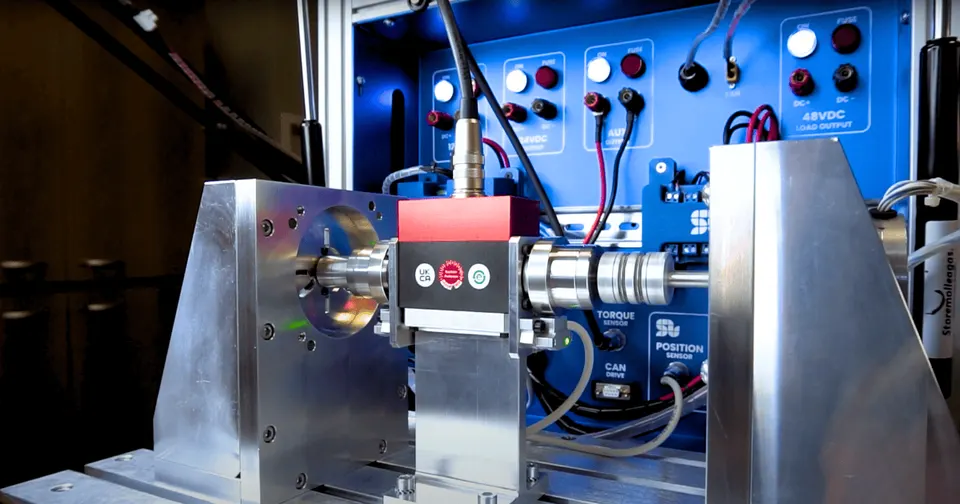
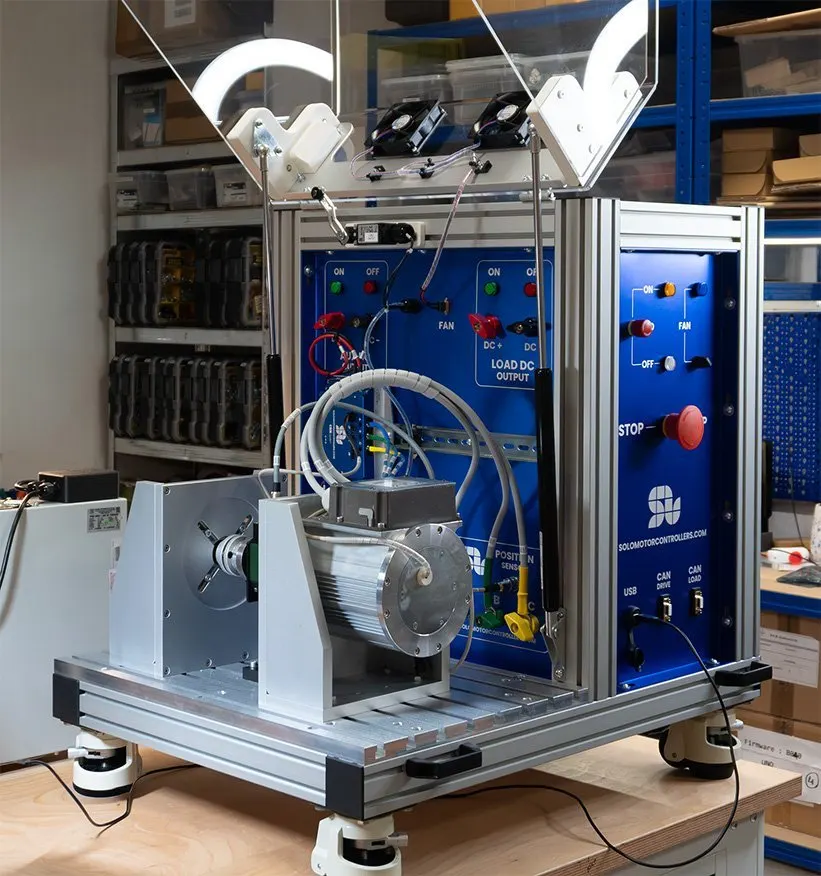
Finally, the software ties it together. It should run automated sequences, log every channel with a time stamp, apply configurable pass/fail limits, and export a report you can drop into your design history file. A bench that only shows a live dial turns every validation run into manual transcription, which is exactly what an auditor distrusts.
Takeaway: repeatable loading, calibrated sensors, and automated logging are what turn a bench into a source of evidence.
From Validation to Production QC
Design validation proves the motor can meet its requirements. Production quality control proves that every unit you ship actually does. They use much of the same hardware, but they ask different questions, so the test changes.
Validation is broad and deep: you map the full range and run endurance, often on a small number of units, to characterize the design. Production QC is fast and focused: a short, repeatable check on the line that catches the unit that drifted out of spec. The shared thread is traceability, because a medical device needs a record for the design and for each serialized unit. Plan the bridge early, so the data your validation bench produces can feed the end-of-line checks you run later in production.
Takeaway: validation characterizes the design, production QC verifies each unit, and traceability connects both.
How SOLO Supports Medical Motor Validation
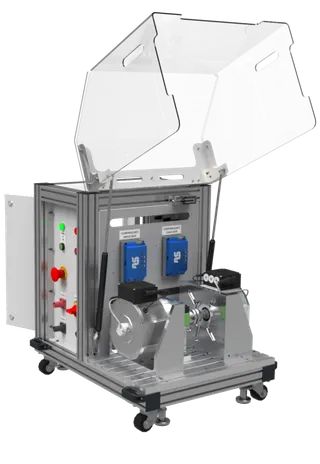
At SOLO we build motor test benches around the controllers we make, and we customize them to your needs at any level, from the load and sensors to the protocols and the report. For medical validation that flexibility matters, because your motors, your operating points, and your documentation format are specific to your device. We support DC, BLDC, PMSM, and AC induction motors on one bench, with torque, speed, temperature, current, and voltage sensing, automated test sequences, and time-stamped logs you can export for your records. The aim is a bench that produces traceable, repeatable evidence around your motor, not a fixed envelope you have to design around. You can see the current SOLO motor test bench and tell us your requirements.
Conclusion
Validating a motor for a medical device is testing plus proof. You confirm the motor stays within spec across its range, behaves well on noise and vibration, and survives its service life, and you do all of it with results that trace to calibrated instruments and a known setup. The compliance frameworks, IEC 60601 and ISO 14971 risk management, do not certify a component on its own, so treat your bench as the tool that generates objective evidence for your file. Get traceability and documentation right from the start, plan the bridge to production QC early, and the audit becomes a review of clean records rather than a scramble. If you want a setup that fits your motors and your reporting, the SOLO motor test bench page is a good next step, and our team can review your requirements.
FAQ
What standards apply to medical device motor testing?
Medical electrical equipment is generally framed by IEC 60601-1 for basic safety, with particular standards for specific device types, and ISO 14971 for risk management. Quality systems usually follow ISO 13485. These standards apply to the finished device and its intended use, so the motor test produces evidence that feeds your file rather than certifying the component on its own.
How does a test bench support regulatory documentation?
It produces traceable evidence. A validation bench records time-stamped data logs, the calibration status of each instrument, the exact configuration of every run, and an audit trail of who ran what. That export drops into your design history file, so a reviewer can follow each result back to a calibrated measurement and a known setup.
What is the difference between validation and verification here?
Verification asks whether you built the motor to its specification, checking it against defined requirements. Validation asks whether it meets the needs of its intended medical use in realistic conditions. In practice you verify against the spec and validate against the use case, and a good bench supplies the recorded evidence for both.
Can the same bench be used for design validation and production QC?
Yes, if it is built for both. Design validation runs broad, deep characterization on a few units, while production QC runs a short, repeatable check on every unit you ship. The hardware overlaps, the test sequence changes, and traceability connects them. Plan the bridge early so validation data and end-of-line checks share the same records.
Tags:ComplianceMedicalTest Bench
Products in this article
Related articles

Efficiency Mapping a Motor: Method and What It Reveals
How to build a motor efficiency map on a test bench: the measurement method, the torque-speed grid, and what the map reveals about a motor.

E-Bike Motor and Controller Validation Bench
How to validate an e-bike motor and controller on a bench: torque and cadence, assist profiles, regen and the metrics that matter for e-bikes.

Robotics Actuator Testing: Validating Motors for Robots
How to validate motors and actuators for robots on a test bench: torque density, backlash, repeatability and the metrics that matter for robotics.
