
Noise and Vibration Management in Motors
Over 30% of industrial motor failures are caused by unmanaged noise and vibration. This often-overlooked issue can damage components, reduce efficiency, and increase costs across nearly every sector that relies on electric motors—from manufacturing and transport to medical devices and consumer electronics.
Whether you’re building a robotic arm, a smart HVAC system, or an electric vehicle, understanding and controlling motor noise and vibration is key to ensuring performance, comfort, and longevity.
Understanding the Causes of Noise and Vibration in Motors
Noise and vibration in motors aren’t random—they usually point to specific mechanical or electrical issues. Here are the most common sources:
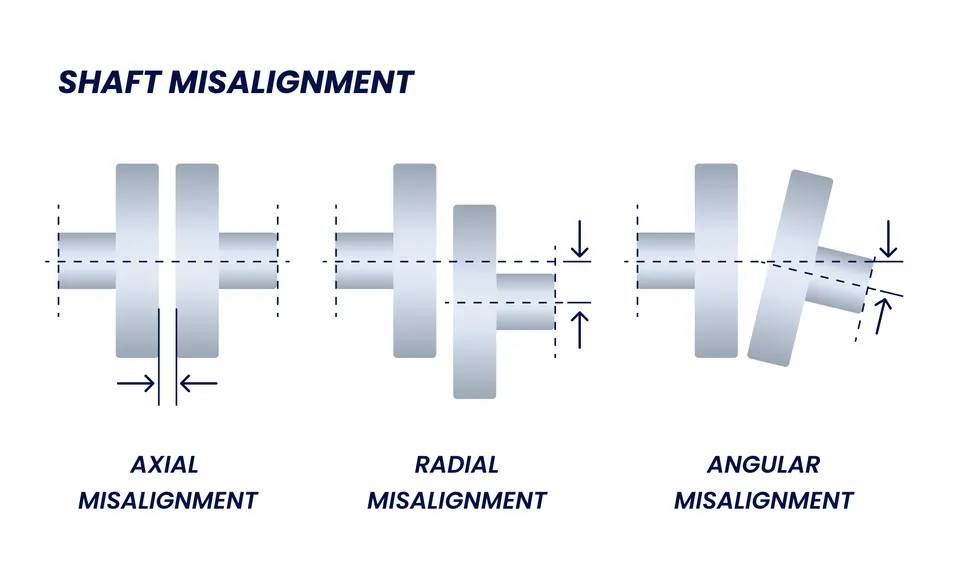
| Cause | Rotor Imbalance | Shaft Misalignment | Commutation Noise | Bearing Defects or Wear | Structural Resonance | Power Supply Disturbances |
|---|---|---|---|---|---|---|
| Explanation | Uneven mass distribution in rotating parts causes wobbling and vibration. | If the motor shaft isn’t perfectly aligned with the driven load, stress is created. | In brushless motors, poor current control can cause torque ripple and acoustic noise. | Worn or damaged bearings produce friction and vibration that increases over time. | When the motor or frame vibrates at its natural frequency, noise and instability increase. | Fluctuations in voltage or poor filtering can lead to both electrical and mechanical issues. |
These problems can arise during motor design, installation, or through long-term wear and tear. That’s why real-time monitoring and adaptive control are becoming more important in modern systems.

Why Managing Noise and Vibration Is Essential
Ignoring vibration and noise may seem like a small mistake—but it often leads to big consequences.
Problems Caused by Poor Management
- Mechanical Damage: Bearings, gears, and couplings wear faster, leading to more frequent breakdowns.
- Reduced Precision: In high-accuracy systems like CNC machines or medical robots, even tiny vibrations lead to large errors.
- Increased Energy Consumption: Vibration means wasted energy, often in the form of heat or friction.
- Customer Complaints: Loud or shaky systems negatively affect user comfort, especially in vehicles or household products.
- Higher Costs: From maintenance and repairs to warranty claims and lost productivity.
On the other hand, effective vibration and noise control delivers serious value—both for the product and the end user.
Benefits of Effective Noise and Vibration Management
| Benefit | Longer Motor Life | Quieter Operation | Improved Accuracy | Lower Energy Costs | Better System Reliability |
|---|---|---|---|---|---|
| Impact | Lower mechanical stress helps reduce component wear and failure. | Important for medical, home, and automotive applications. | Essential in precision systems like robotics and CNC machinery. | Efficient motor behavior means less wasted power. | Reduces downtime and makes maintenance easier to plan. |
These advantages are why industries across the board are investing in better motor control solutions and noise/vibration management strategies.
Applications Where Noise and Vibration Control Is Critical
| Industry | Automotive | Industrial Machines | Healthcare | Consumer Electronics | Aerospace & Defense |
|---|---|---|---|---|---|
| Examples | Electric vehicle motors, HVAC, power steering | CNC, 3D printers, conveyors | MRI beds, surgical robots, ventilators | Drones, fans, vacuum cleaners | Navigation systems, actuators |
| Why It Matters | Reduces cabin noise, improves driving experience, and protects components. | Ensures precision, stability, and longer machine life. | Patient comfort and equipment sensitivity demand minimal vibration. | Quiet operation improves user experience and perceived quality. | Stability and reliability under vibration-critical conditions. |
These industries depend on low-noise motors and vibration-resistant designs—and increasingly on advanced motor controllers that support these needs.

General Methods for Controlling Motor Noise and Vibration
Managing noise and vibration starts with identifying the root cause. Here are some widely used strategies:
Mechanical Solutions
- Balancing Rotors: Ensures even weight distribution to prevent wobble.
- Vibration Dampers and Mounts: Physically absorb and isolate vibrations.
- Precision Bearings and Alignment: Reduces friction and mechanical mismatch.
Electrical & Control Solutions
- Soft Starting / Acceleration Curves: Prevents sudden force that can shake the system.
- Torque Ripple Reduction: Ensures smoother delivery of power in brushless motors.
- Advanced Control Algorithms (like FOC): Fine-tune current and voltage output to match the motor’s needs exactly.
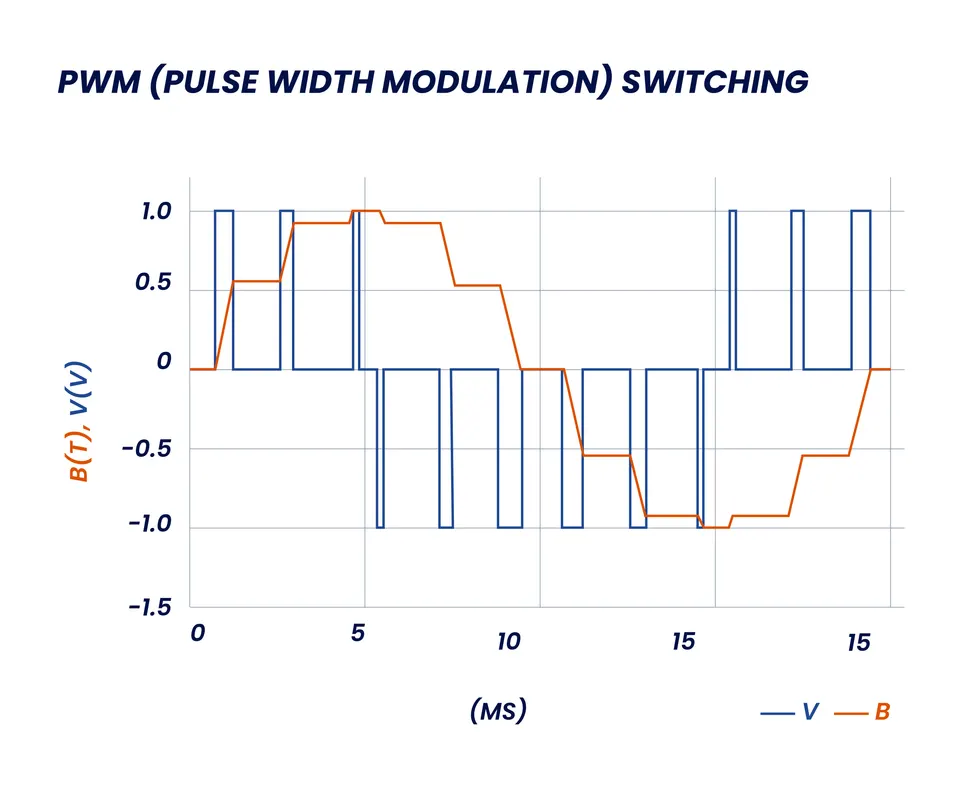
- High-Frequency PWM: Reduces audible switching noise from the controller.
These techniques can be combined in both hardware and software for best results.

How Motor Controllers Play a Key Role
Today, motor controllers are doing more than just turning motors on and off. Smart controllers can:
- Adjust motor response in real time based on feedback from encoders or sensors.
- Detect and react to imbalance or resonance conditions.
- Provide smoother torque and reduce current spikes that cause vibration.
- Offer fine control over speed, position, and acceleration.
This is where companies like SOLO Motor Controller come in—with advanced features that make noise and vibration control much easier and more precise.
SOLO Motor Controller: A Smarter Way to Handle Vibration and Noise
Key Features SOLO Offers:
| Feature | Field-Oriented Control (FOC) | Low-Noise PWM | Encoder + Sensorless Modes | Real-Time Tuning Interface | Cross-Platform Support |
|---|---|---|---|---|---|
| How It Helps | Allows extremely smooth and stable torque delivery. | Reduces audible noise during motor switching. | Gives flexibility for different applications and compact setups. | Engineers can adjust control parameters live, with immediate feedback. | Works with Arduino, STM32, Raspberry Pi, and others for quick integration. |
By offering these features in an easy-to-use package, SOLO makes it easier for engineers to design motors that are quieter, more precise, and more reliable—without having to build complex control systems from scratch.

Conclusion
Noise, vibration, and electrical instability are not inevitable by-products of motor systems—they’re challenges that can be identified, understood, and controlled. With the right design strategies and proactive electrical protection, engineers can create systems that run quieter, last longer, and perform more reliably.
In a world driven by automation and precision, managing voltage spikes isn’t just a protective measure—it’s a step toward building smarter, more sustainable technology.
Related articles

Python on Raspberry Pi: Production Motor Control Tips with SOLO
Production tips for Python motor control on Raspberry Pi with SOLO: SoloPy setup, robust serial/CAN, threading, error recovery and reliable deployment.

EtherCAT Motor Control with the SOLO SOM
How EtherCAT motor control works with the SOLO SOM: CoE and CiA 402, distributed clocks, cyclic synchronous modes and wiring a deterministic servo network.

Cogging Torque vs Torque Ripple: What Is the Difference
Cogging torque vs torque ripple explained: what causes cogging, how it differs from torque ripple, when each matters, and how FOC and design reduce them.
