
Torquemeter in Test Benches
Did you know? Over 80% of test bench errors in industrial motor development are due to inaccurate or missing torque measurement. Yet many testing setups still overlook the importance of a torquemeter, risking costly mistakes and delayed production.
A torquemeter—also known as a torque sensor—is a crucial component in many motor test benches, especially where accuracy, consistency, and control of torque are required. Whether you are testing electric motors, gearboxes, or robotic actuators, having a precise way to measure torque is essential.
At SOLO Motor Controllers, we understand that not every application has the same needs or budget. That’s why we support flexible integration with torquemeters, giving users the freedom to scale their setups based on real-world requirements.
What is a Torquemeter in Test Benches?
A torquemeter is a device used in motor test benches to measure the rotational force (torque) applied by or to a motor. It helps developers understand how a system behaves under load, monitor performance, and fine-tune motor control algorithms.
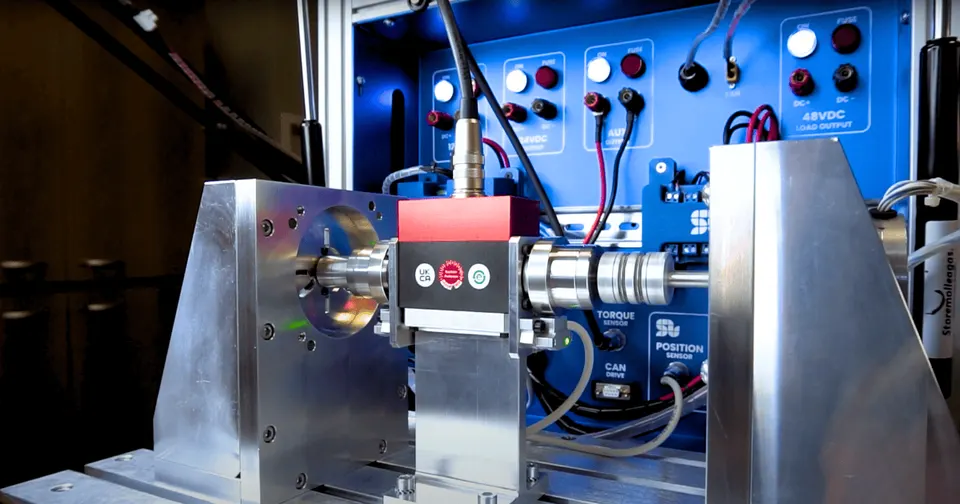
| Feature | Measured Parameter | Installation | Output | Accuracy | Integration with SOLO |
|---|---|---|---|---|---|
| Description | Rotational force (Nm or lb-ft) | Between motor and load/dyno | Analog or digital signal | Typically high, with calibration | Compatible with analog torque input systems |
Applications of Torquemeter in Test Benches
Torquemeters are used across various industries and technologies, including:
- Electric vehicle drivetrain testing
- Servo motor tuning and calibration
- Gearbox efficiency analysis
- Pumps, fans, and compressor testing
- Industrial automation and robotics
- Quality control in motor manufacturing
In all these fields, measuring torque is key to ensuring performance, safety, and efficiency.

Advantages of Using a Torquemeter
Accurate Measurement
A torquemeter gives precise data on motor output, enabling better decisions during motor design, control development, and production testing.
Improved Motor Control
With torque feedback, closed-loop systems using SOLO Motor Controllers can adjust in real-time for maximum efficiency and safety.
Supports Predictive Maintenance
Detecting torque deviations early helps prevent breakdowns, reducing costly downtime.
Optimized Load Simulation
In test benches, torquemeters help create realistic scenarios by adjusting loads based on measured output.
Disadvantages and Considerations
While a torquemeter brings major benefits, there are some limitations to consider:
Cost Sensitivity
High-precision torquemeters can be expensive, especially in multi-channel or high-torque setups.
Speed and Torque Limits
Each torquemeter has a maximum rated speed and torque. Exceeding these can damage the sensor or reduce accuracy.
Application-Specific
In some basic applications, a torquemeter may not be necessary, especially where other methods of estimating torque are sufficient.
Preventive Measures When Using a Torquemeter
To avoid common issues and extend the life of your torque sensor, follow these best practices:
- Stay within rated speed and torque limits to prevent overload damage.
- Calibrate regularly to maintain precision and detect sensor drift.
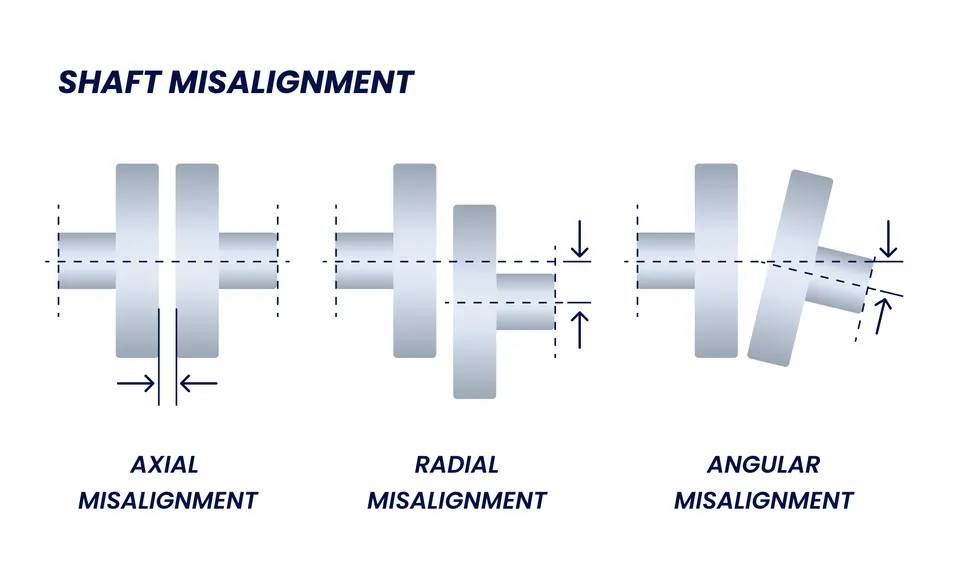
- Avoid mechanical misalignment when installing between motor and load.
- Use shielded cables for signal lines to reduce electrical noise.
- Ensure compatible signal output when interfacing with your motor controller.
At SOLO, our motor controllers are designed to integrate with analog torque feedback signals, simplifying the connection with most common torquemeters.
Pros & Cons of Using a Torquemeter in Test Benches
| Pros | High-accuracy torque measurement | Enables advanced motor control and tuning | Improves system diagnostics and safety | Essential for compliance testing in R&D | Helps reduce energy losses and improve design |
|---|---|---|---|---|---|
| Cons | Can be expensive for high-end models | May not be required for all use cases | Limited by maximum rated torque and speed | Requires careful installation and calibration | Adds cost and complexity to simpler test rigs |
Why Choose SOLO Motor Controller for Torque-Driven Applications?
At SOLO, we design our motor controllers to provide torque control, analog feedback reading, and real-time monitoring—all of which support advanced integration with torquemeters. This makes SOLO ideal for both entry-level and advanced test bench setups.
Whether you are building a small torque testing bench or a full EV drivetrain lab, our products offer:
- Analog torque input support
- Current and torque control modes
- Real-time tuning with monitoring tools
- Sensorless and encoder-based operation

Conclusion
In today’s data-driven world, having a torquemeter in your motor test bench can give you a competitive edge in precision, safety, and innovation. While the cost and complexity may seem like a hurdle, the value it delivers in performance measurement, motor development, and product validation is undeniable.
If you want to unlock the full potential of your test benches, especially in torque-sensitive applications, consider integrating a SOLO Motor Controller with a torquemeter. Our solutions are built to make complex testing easier, more accurate, and more cost-effective—so you can focus on building better systems, faster.
Products in this article
Related articles
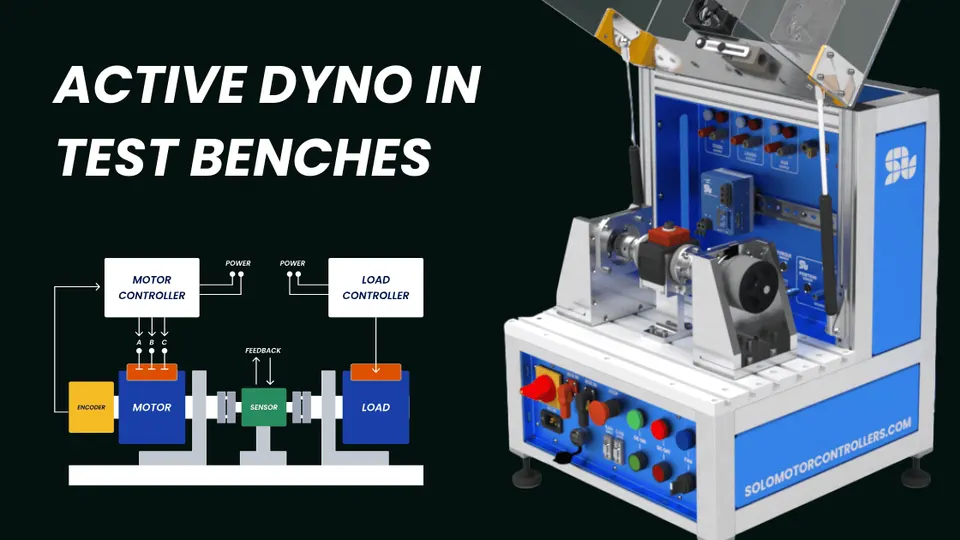
Active Dyno in Test Benches
Test EV, BLDC, and servo motors with precision using Active Dyno benches powered by SOLO Motor Controllers for bidirectional control and R&D.

Test Bench for Thermal Stress Testing
Discover how thermal stress test benches improve motor reliability, safety, and efficiency by simulating real-world heat conditions.
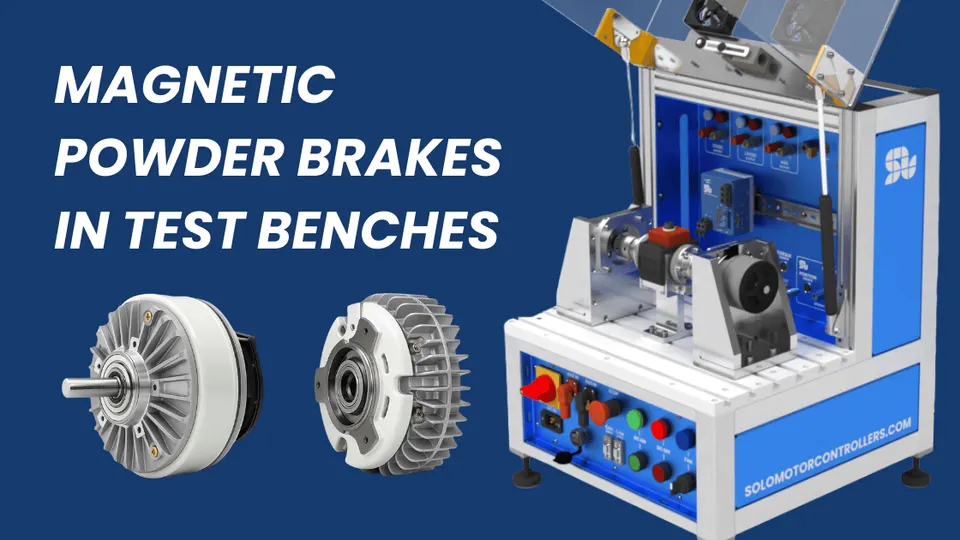
Magnetic Powder Brakes in Test Benches
Magnetic powder brakes offer precise torque control for test benches in automotive, aerospace, and R&D, enhanced by SOLO motor controllers.
