
Active Dyno in Test Benches
Did you know that over 60% of electric motor failures in industrial applications are due to issues that could have been detected during testing?
This surprising statistic reveals why modern test benches equipped with an Active Dyno (Active Dynamometer) are becoming essential in research, development, and production environments
What Is an Active Dyno?
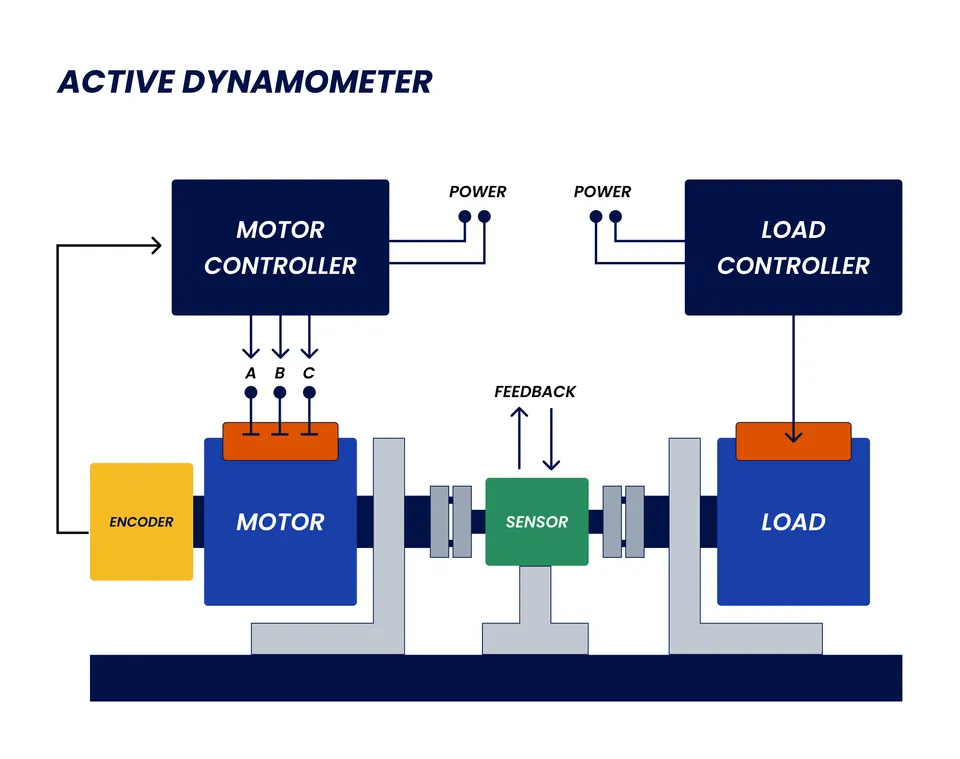
An Active Dynamometer is a type of load device used in motor test benches that can both absorb and supply energy to a motor. This makes it ideal for simulating real-world conditions, including load variations, regenerative braking, and bidirectional torque control.
Unlike a passive dyno that only absorbs power (acting like a brake), an Active Dyno works bidirectionally, enabling it to drive the motor or act as a load. This flexibility makes it a must-have in modern motor test bench setups, especially for testing:
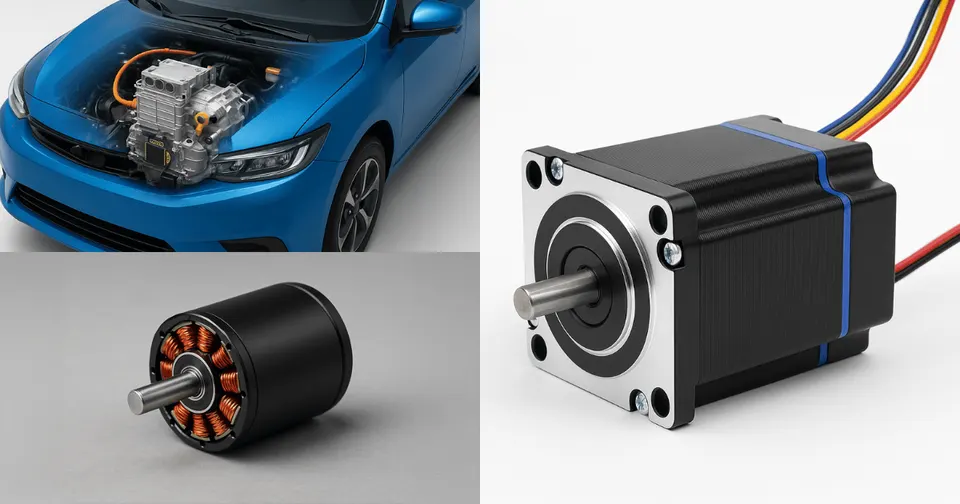
- Electric vehicle motors
- Robotics actuators
- Industrial automation systems
- Home appliances motors
- Renewable energy generators
Applications of Active Dyno in Test Benches
| Industry | Automotive | Aerospace | Industrial Automation | Research & Development | Consumer Electronics |
|---|---|---|---|---|---|
| Application Example | EV motor efficiency testing, gearbox durability | Servo motor testing under flight-like conditions | Lifecycle testing for stepper and BLDC motors | Motor algorithm verification, control tuning | Load simulations for fan motors, vacuum cleaners |
Using an Active Dyno allows engineers to simulate precise load profiles, test under extreme conditions, and validate motor behavior during regenerative cycles.
Advantages of Active Dyno in Motor Test Benches
| Advantage | Full Control | Real-World Simulation | High Accuracy | Supports Regeneration | Flexibility | Ideal for Advanced Testing |
|---|---|---|---|---|---|---|
| Description | Provides precise torque and speed control in both directions | Emulates dynamic road/load conditions | Delivers data-rich diagnostics and performance curves | Can handle regenerative energy from motors safely and effectively | Adaptable to different motor types and voltage levels | Enables software-in-the-loop (SIL) and hardware-in-the-loop (HIL) setups |
Disadvantages of Active Dyno Systems
| Disadvantage | Higher Initial Cost | Complex Configuration | Larger Footprint | Specialized Knowledge |
|---|---|---|---|---|
| Details | Active systems are more expensive due to complex electronics and design | Requires advanced setup and tuning, not ideal for all testing needs | Often requires more space and dedicated power supply | Needs trained personnel for operation and maintenance |
Pros and Cons of Active Dyno in Test Benches
| Pros | High flexibility for testing various motor types and load conditions | Real-time energy flow in both directions | Suitable for regenerative applications | Precise torque and speed control for accuracy |
|---|---|---|---|---|
| Cons | Can be costly compared to passive alternatives | Requires more technical expertise | Setup complexity might be a barrier for small-scale test labs | Maintenance needs can be higher due to more components |
Preventive Measures to Maximize ROI
To make the most of your Active Dyno investment, consider the following:
- Use a modular controller like SOLO Motor Controller, which supports bidirectional energy flow and advanced feedback systems.
- Ensure proper cooling systems are in place, especially when testing at high loads.
- Regular firmware updates and calibration of sensors for accuracy.
- Use data logging and diagnostics tools to detect faults early.
- Train staff with online or in-person workshops to handle active dyno systems efficiently.
Why SOLO Motor Controller Is the Ideal Partner
At SOLO Motor Controller, we understand the complexity and demands of Active Dyno applications in test benches. That’s why we provide a standard solution designed with flexibility, precision, and reliability in mind.
With SOLO, you get:
- Bidirectional control (ideal for Active Dyno systems)
- Support for BLDC, PMSM, brushed DC, and stepper motors
- Integrated current, speed, and position control
- Regenerative braking capabilities
- Easy configuration through SOLO Studio and UART/CANopen interfaces

Conclusion
Active Dyno in Test Benches is no longer a luxury—it’s becoming a necessity for precise, reliable, and future-ready motor testing. Whether you’re developing next-generation EVs, refining robotics control algorithms, or running endurance tests, an Active Dynamometer system can transform your testing process.
However, complexity and cost can be a barrier—unless you choose a smart solution like SOLO Motor Controller that brings standard support for these features without the need for expensive customization.
Related articles
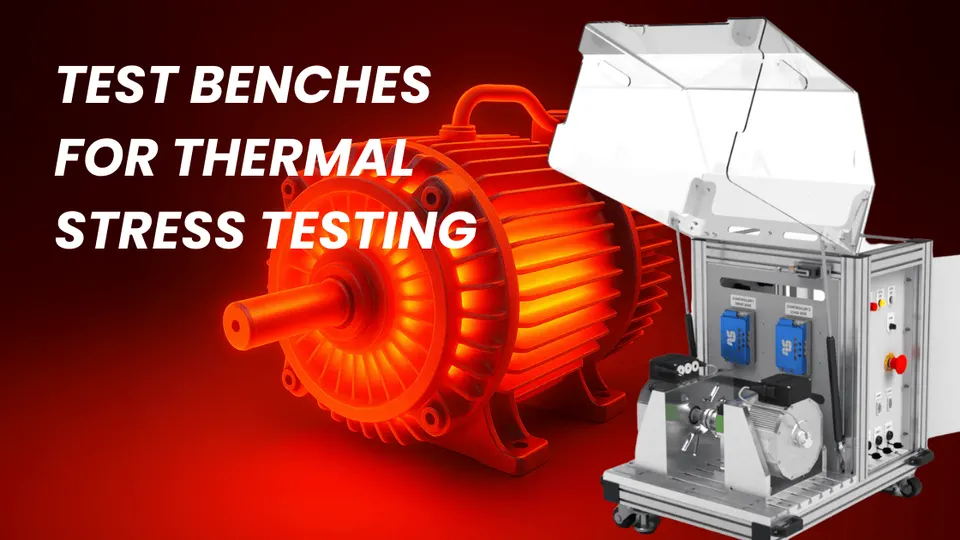
Test Bench for Thermal Stress Testing
Discover how thermal stress test benches improve motor reliability, safety, and efficiency by simulating real-world heat conditions.
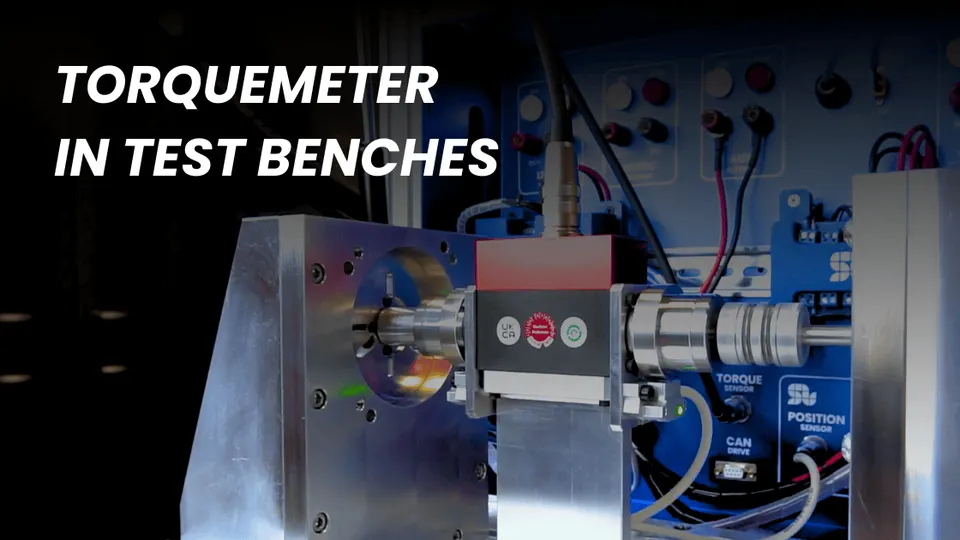
Torquemeter in Test Benches
Discover why torquemeters are essential for accurate motor testing and how SOLO Motor Controllers simplify torque-driven test bench setups.
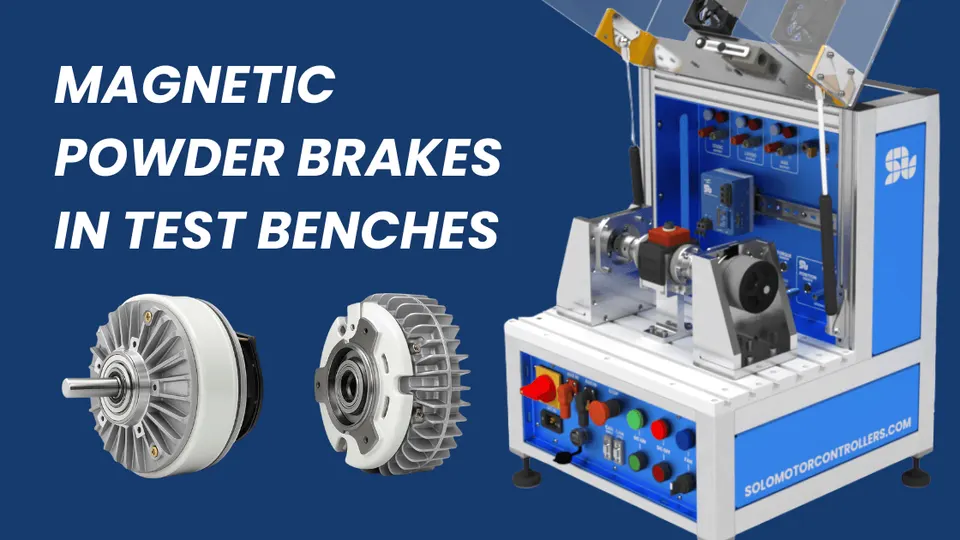
Magnetic Powder Brakes in Test Benches
Magnetic powder brakes offer precise torque control for test benches in automotive, aerospace, and R&D, enhanced by SOLO motor controllers.
