
Case Study: EV Drivetrain Motor Validation on a SOLO Bench
Introduction
A single field return on an EV drivetrain can cost more than a full validation program on the bench. That was the math facing an EV drivetrain manufacturer that needed to sign off a new traction motor before it entered production, with a hard launch date in the way.
This case study walks through how the motor was validated on a SOLO test bench: the goal, the setup, the test plan, and what the data showed. Details are anonymized, but the method is the one you would follow on any drivetrain.
The Challenge
The team had a new traction motor, a few kilowatts of continuous power, paired with its own inverter. On paper the numbers looked right. The problem was proving them under real load, across the full speed range, before committing to tooling and a production run.
Two constraints shaped the work. First, time: the validation had to fit inside a fixed program window, not stretch for months. Second, confidence: the team needed measured data they could defend, not a no-load spin test that proves only that the motor turns. A motor that looks fine at no load can still lose torque, overheat, or drift out of spec once it drives a real wheel.
Takeaway: the goal was not “does it spin”, it was “does it perform across its real envelope, on time”.
What Validation Had to Prove
Before any wiring, the team and SOLO agreed on what success looked like. Clear pass criteria keep a validation honest, so they were written down first.
| Area | What had to be proven | Pass criteria (illustrative) |
|---|---|---|
| Torque envelope | Peak and continuous torque across the speed range | Meets the spec curve, with margin |
| Efficiency | Efficiency at the key operating points | Within target at cruise and peak |
| Thermal | Winding temperature under sustained load | Stays inside the rated limit |
| Repeatability | Same result on a re-run | Curves overlap within tolerance |
The torque envelope mattered most, because the whole drivetrain is sized around it. Efficiency at the cruise point drives range, so a small shortfall there is a real product problem. Thermal behavior under a long load decides whether the motor survives a hot day. Each one had a number, not an opinion.
The Bench Setup
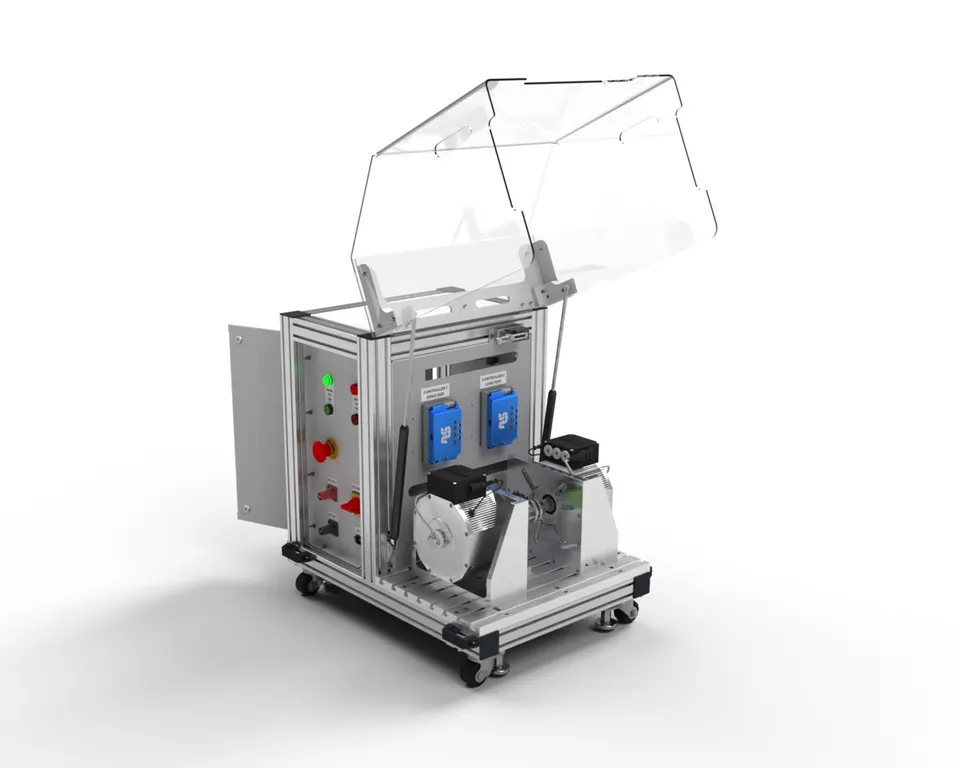
The motor under test was coupled to an active dynamometer, a second controlled motor that can both absorb and drive the shaft. For an EV traction motor that choice is not optional. You need a load that supports regeneration and full four-quadrant operation, because the motor will both push and brake in service. A simple brake can only absorb, so it cannot reproduce the regen side.
Between the two machines sat a torque sensor and a speed and position sensor, plus current and voltage sensing from the drive and temperature probes on the windings. That sensor set is what turns a spin into measured curves you can trust. For the parts a bench includes, see our overview of an electric motor test bench.
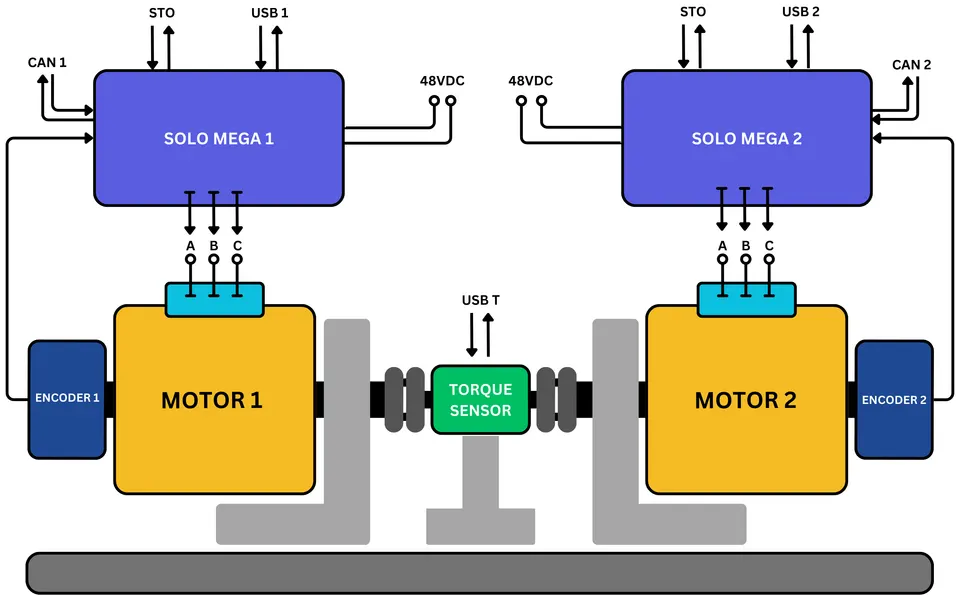
The frame was sized above the motor’s peak torque and speed, with headroom, so the bench never became the limit during a test.
Takeaway: an active dyno plus a proper sensor set is the floor for EV validation, not an upgrade.
The Test Plan
The plan moved from simple to hard, so a problem would show up early and cheap.
It started with static load points. The bench held the motor at fixed speed and torque pairs across the envelope and logged torque, current, voltage, and temperature at each. From those points the software built the torque-speed and efficiency maps. This is where a shortfall in peak torque or a soft efficiency point becomes visible.
Next came a drive cycle. Instead of fixed points, the active dyno played back a realistic load profile, with acceleration, cruise, and regen braking, so the motor saw the kind of duty it meets on the road. A drive cycle catches behavior that static points miss, like how the motor handles fast transitions and recovers energy.
Last was endurance and thermal. The bench ran the motor at a sustained load point, unattended, logging winding temperature until it settled or hit a limit. This is the part that decides whether the motor survives a long climb. A sustained thermal run is the only way to see how the windings behave over hours, not seconds.
Every channel was time-stamped and logged, so each run could be replayed and compared later. That is what made the re-run check meaningful.
Results
The bench confirmed most of the spec and flagged the things that mattered. Numbers below are illustrative, kept generic on purpose.
The torque envelope held across the range, with margin at the peak point. The efficiency map met target at cruise, which is the point that drives range, so that was the headline pass. Repeatability was clean: a second run laid its curves over the first within tolerance, which gave the team confidence the data was real and not a one-off.
The value, though, was in what the bench caught before production. Under the sustained thermal run, winding temperature climbed faster than the model predicted at one load point, pointing to a cooling margin that was thinner than assumed. On the drive cycle, a transition between motoring and regen showed a small control behavior worth tuning. Neither would have shown up in a no-load test. Both are cheap to fix on the bench and expensive to fix in the field.
Takeaway: the bench passed the motor where it deserved to pass, and caught two issues while they were still cheap.
Why It Mattered
The point of a validation like this is risk management. A drivetrain motor that ships with a thin cooling margin does not fail on the desk. It fails on a hot day, on a long climb, in a customer’s vehicle, where the cost is a recall, a warranty claim, and a hit to the brand. Catching that on the bench turns a field failure into a line item in a test report.
That is the same logic behind any de-risking step before production: spend measured time early to avoid an unbounded cost later. For an EV program with a launch date, a few weeks of bench work is a small insurance premium against a return campaign.
Takeaway: the bench did not just confirm the motor, it priced out a risk before it could become a field cost.
How SOLO Delivered This Validation
SOLO handled the validation end to end: configuring the bench around the motor, agreeing the pass criteria, running the static points, drive cycle, and thermal endurance, then delivering the logged data and maps. Because the bench is built on the same controllers SOLO makes and is customized to the motor under test, the dyno, sensors, and protocols fit the drivetrain instead of forcing it into a fixed envelope. The team supports DC, BLDC, PMSM, and AC induction motors on one bench, with active loading and automated logging. You can see the SOLO motor test bench and tell us your motor’s specs.
Conclusion
An EV drivetrain manufacturer needed measured proof of a traction motor, on a deadline. On a SOLO bench with an active dyno, the motor was run through static load points, a realistic drive cycle, and a sustained thermal test, with every channel logged. The data confirmed the torque envelope and the cruise efficiency, and it caught a thin cooling margin and a regen transition worth tuning before production. That is the real return of bench validation: it confirms what works and finds what does not, while fixes are still cheap. If you have a drivetrain to validate, the SOLO test bench page is a good next step, and our team can review your requirements.
FAQ
Can this kind of validation be done on a standard bench?
Sometimes, if your motor happens to fit the standard envelope of power, voltage, and protocols. EV traction motors often sit outside it, and they need an active dyno for regen, so a rigid bench can become a limit you find after the purchase. A bench customized to the motor avoids that.
How long does an EV drivetrain validation take?
It depends on the test plan. Static load points and an efficiency map are fast. A drive cycle and a sustained thermal endurance run take longer, often the bulk of the time, since they run for hours. As a rule, a focused EV validation fits in weeks, not months, when the criteria are agreed up front.
Can the case study details be shared under NDA?
The specifics in any real validation, the client, the exact motor, and the raw numbers, stay confidential. We can discuss the method, the bench configuration, and the kind of results a validation produces under NDA, without exposing another customer’s data.
Products in this article
Related articles
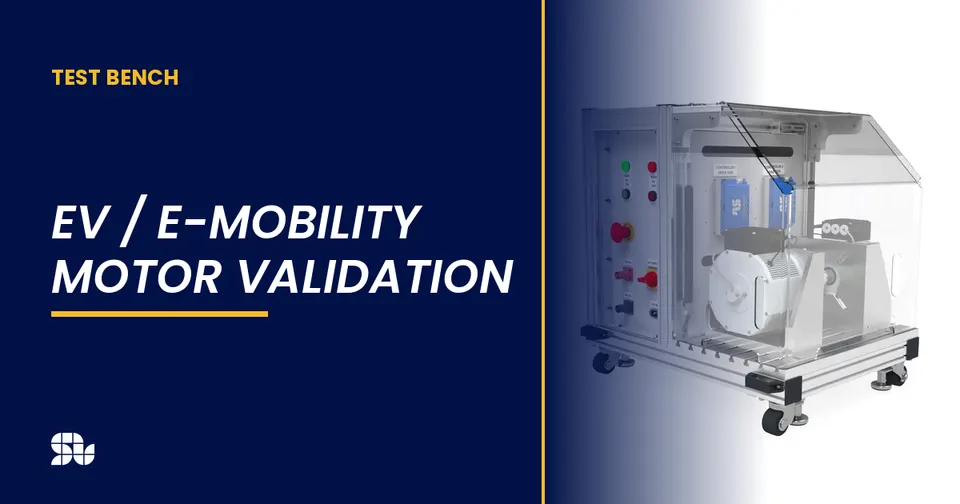
EV / E-Mobility Motor Validation: Test Bench Setup
How to set up a test bench for EV and e-mobility motor validation: power envelope, dyno loading, thermal and protocol needs for traction motors.

Efficiency Mapping a Motor: Method and What It Reveals
How to build a motor efficiency map on a test bench: the measurement method, the torque-speed grid, and what the map reveals about a motor.
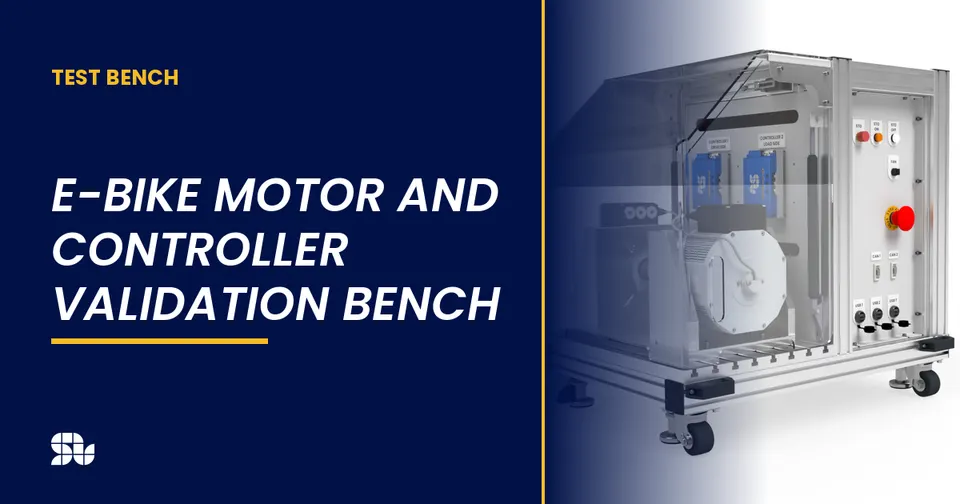
E-Bike Motor and Controller Validation Bench
How to validate an e-bike motor and controller on a bench: torque and cadence, assist profiles, regen and the metrics that matter for e-bikes.
