
Portable vs. Stationary Motor Test Benches
Did you know that nearly 70% of motor system failures are detected during routine testing on a motor test bench? This surprising statistic shows just how important motor test benches are in preventing breakdowns, reducing downtime, and improving performance. But when it comes to choosing the right motor test bench, the question arises: portable or stationary?
At SOLO Motor Controller, we know that every testing environment is different. That’s why we design custom motor testing solutions based on your needs, ensuring both efficiency and safety.
Applications of Motor Test Benches
| Type | Portable Test Benches | Stationary Test Benches |
|---|---|---|
| Common Applications | Field diagnostics, on-site motor testing, educational labs, temporary installations | R&D labs, industrial testing centers, high-power motor testing, endurance tests |
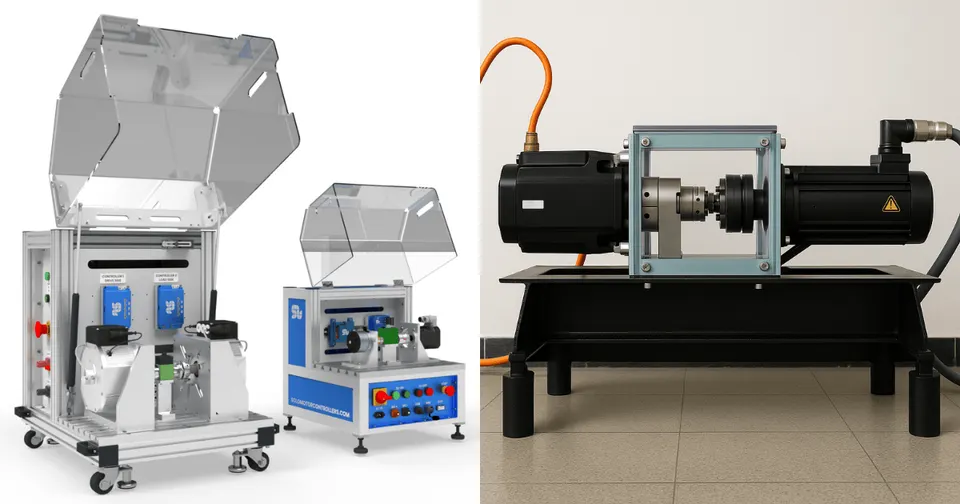
Whether in a factory, research lab, or in the field, motor test benches are essential tools for:
- Measuring motor performance
- Verifying motor controller behavior
- Testing torque, speed, current, and temperature
- Ensuring product reliability before mass production
What is a Portable Motor Test Bench?
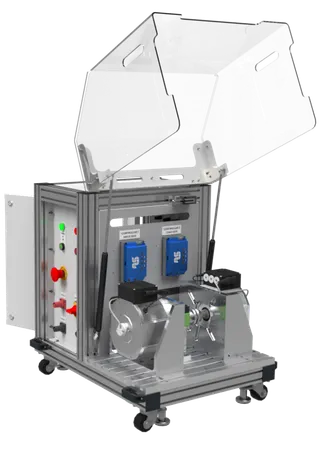
A portable motor test bench is a compact and mobile setup designed for quick deployment. It’s typically lightweight, often foldable or mounted on wheels, and includes minimal but essential testing equipment.
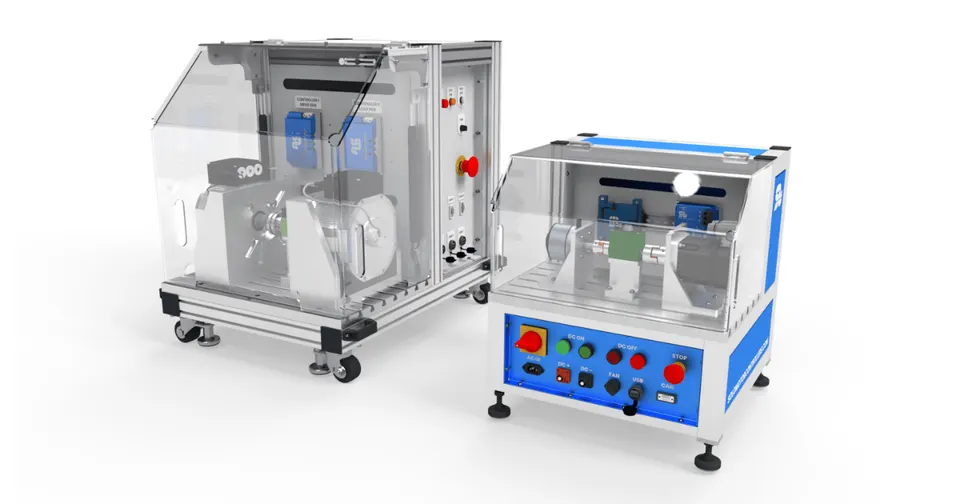
Advantages of Portable Test Benches
- Easy to transport for field work
- Ideal for temporary test environments
- Fast setup and teardown
- Cost-effective for short-term or low-scale testing
Disadvantages of Portable Test Benches
- Limited power capacity
- Not suitable for high-performance or large motors
- Lower mechanical stability
- Limited safety features compared to stationary systems
What is a Stationary Motor Test Bench?
A stationary motor test bench is a robust, permanent installation designed for continuous or high-power testing. These are often custom-built to fit specific industrial motor testing requirements.
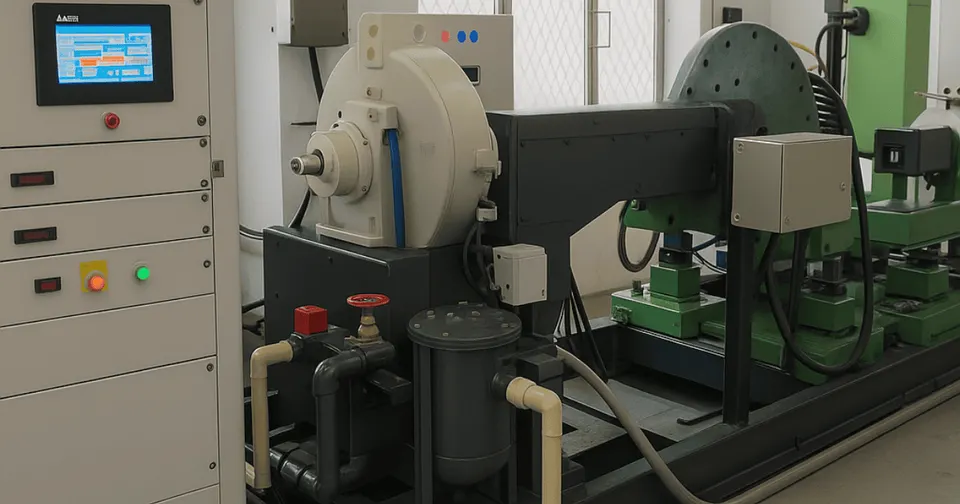
Advantages of Stationary Test Benches
- High durability and mechanical rigidity
- Suitable for heavy-duty or long-term motor testing
- Advanced data acquisition systems
- Improved safety systems and automation
Disadvantages of Stationary Test Benches
- High initial investment
- Requires dedicated space and infrastructure
- Not suitable for mobile or temporary testing needs
Portable vs. Stationary: Comparison Table
| Feature | Mobility | Power Handling | Setup Time | Customization | Safety | Use Case | Cost |
|---|---|---|---|---|---|---|---|
| Portable Test Bench | High | Limited | Fast | Moderate | Depends on usage | Field testing, education | Lower |
| Stationary Test Bench | Low | High | Longer | High | Built-in features | Industrial testing, R&D | Higher |
Preventive Measures for Safe Motor Testing
Safety is essential, no matter what type of motor test bench you choose. In all cases, it depends on the application and the user to properly distribute safety measures to prevent different risks.
Key safety recommendations:
- Always use overcurrent and thermal protection
- Make sure the bench is grounded properly
- Use emergency stop switches and shields
- Regularly check cables and connectors
- Implement software safety limits using advanced controllers like the SOLO Motor Controller
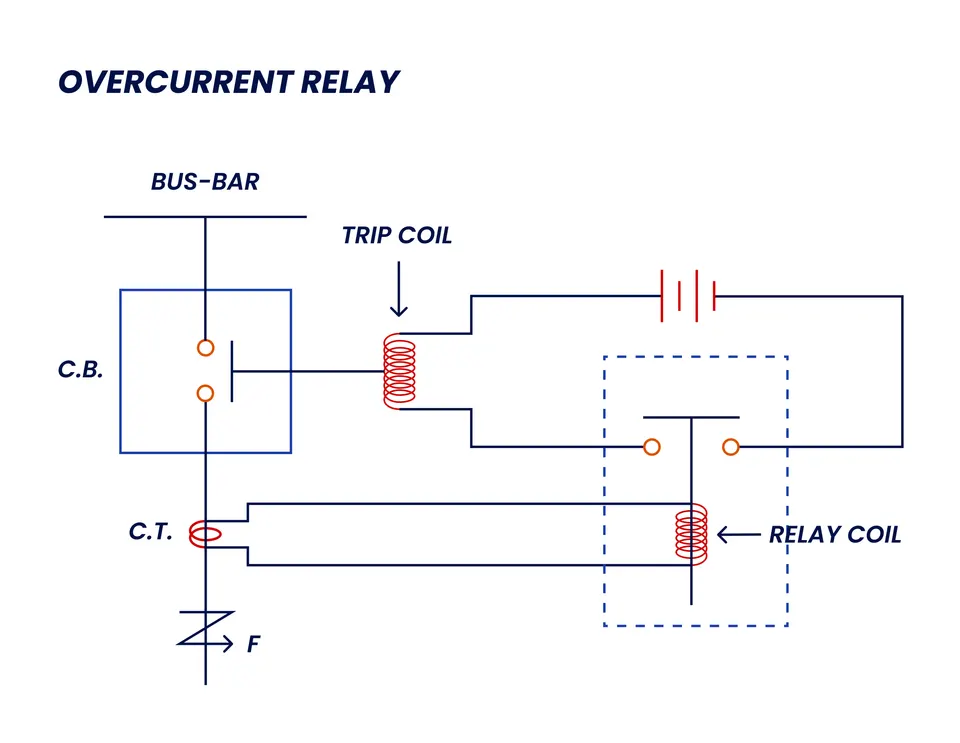
How SOLO Motor Controller Enhances Your Test Bench
We don’t just provide hardware—we offer customized solutions. At SOLO, we design motor test benches based on customer studies, adapting to your unique needs. Whether portable or stationary, our controllers offer:
- Real-time data monitoring
- High-precision motor control
- Easy integration with BLDC, PMSM, brushed DC, or stepper motors
- Advanced safety protocols
- Plug-and-play features for fast deployment

Conclusion
In the end, the choice between a portable or stationary motor test bench depends on your application, environment, and goals. Are you running mobile tests in the field, or designing long-term test programs in a lab?
Whatever your case, SOLO Motor Controller can help you build the ideal system with safety, reliability, and performance in mind. Our expert team is here to customize motor test benches tailored to your exact needs.
Products in this article
Related articles
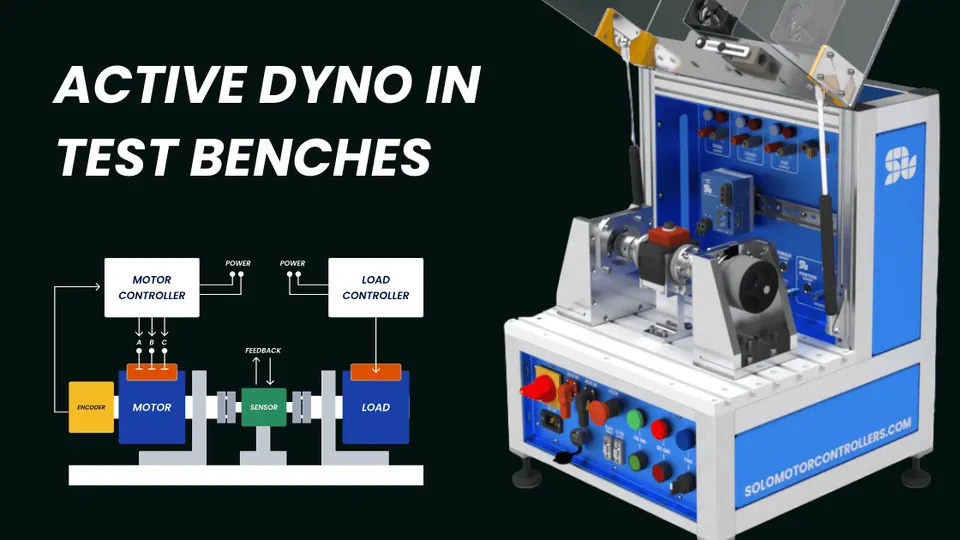
Active Dyno in Test Benches
Test EV, BLDC, and servo motors with precision using Active Dyno benches powered by SOLO Motor Controllers for bidirectional control and R&D.

Test Bench for Thermal Stress Testing
Discover how thermal stress test benches improve motor reliability, safety, and efficiency by simulating real-world heat conditions.
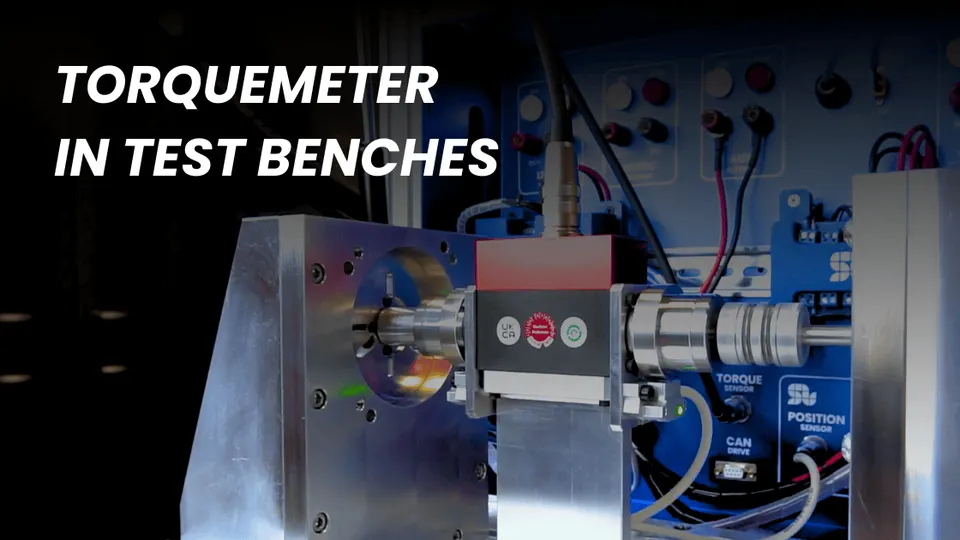
Torquemeter in Test Benches
Discover why torquemeters are essential for accurate motor testing and how SOLO Motor Controllers simplify torque-driven test bench setups.
