
Custom vs Off-the-Shelf Motor Test Bench: Which to Pick
Introduction
Most motor projects do not fit a catalog model cleanly. A standard bench is sized around a typical motor, a typical voltage, and a typical protocol. Your motor often sits a little outside one of those. Maybe the bus voltage is higher than the listed range. Maybe you need CANopen when the bench speaks Modbus. One mismatch is enough to turn a quick purchase into months of workarounds.
This article assumes you already decided to buy rather than build. The next question is whether to take a standard, off-the-shelf bench or a custom one built to your spec. We compare the two on cost, lead-time, fit, upgradability, and risk, so you can match the bench to your motors instead of bending your tests to the bench.
What Off-the-Shelf Covers (and Its Limits)
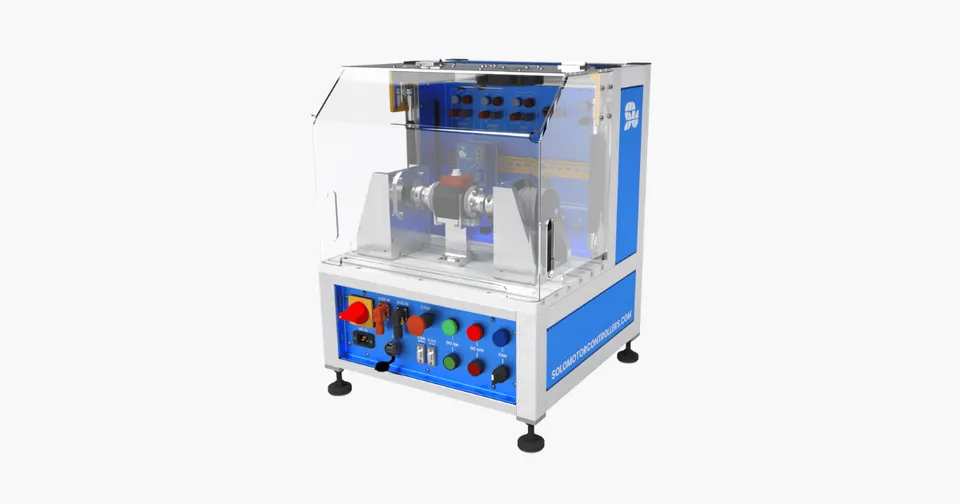
An off-the-shelf motor test bench is a fixed configuration. The maker picks a power range, a dyno type, a sensor set, and a control interface, then sells the same unit to everyone. For a motor that lands inside that envelope, this is the fast and lower-cost path. You order it, it ships, you run your first test in days, not months.
The limit is the envelope itself. A standard bench is built around fixed values for power, voltage, and protocols. As long as your motor sits inside those fixed values, the bench feels simple. The moment a requirement steps outside, the same bench gets rigid. You start adding adapters, external sensors, and scripts to cover the gap, and that added complexity is a real cost you only discover after the purchase.
So the catalog bench is not bad. It is just narrow by design. The honest question is how close your motors, your voltages, and your tests sit to the standard envelope. If they sit dead center, off-the-shelf is usually the right call. If they sit near the edge, or keep moving, rigidity becomes the thing you pay for later.
Takeaway: off-the-shelf is fast and cheap when your needs match the fixed envelope, and stiff the moment they do not.
When You Need a Custom Test Bench
A custom test bench is built around your motors and your tests, not the other way around. You do not need it for every project. You need it when one of three things falls outside the standard envelope. Here is how to tell.
Unusual Power, Torque or Speed Envelope
The most common reason to go custom is range. Catalog benches cluster around popular ratings. If your motor peaks well above the listed torque, spins past the rated RPM, or runs at a bus voltage the standard frame was never built for, an off-the-shelf unit either cannot test it or tests it with no headroom.
For example, a bench rated for 48 V and 5 Nm will not safely drive an 800 V traction motor at 20 Nm. No adapter fixes that. The dyno, the coupling, the sensors, and the power stage all have to be sized for your real numbers. A custom bench sizes them once, to your largest planned motor, with room to grow.
Special Protocols or Automation
The second reason is the control side. Many standard benches speak one fieldbus and offer a fixed software flow. If your lab runs on CANopen or EtherCAT, or you need to script an unattended endurance run and log every channel to your own database, a closed catalog tool fights you.
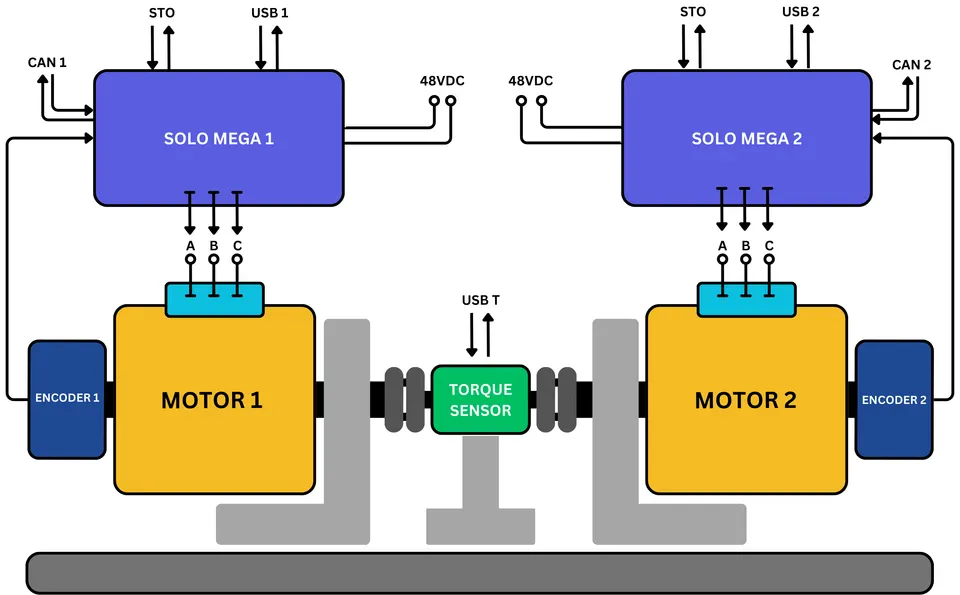
A bench built to spec can match your protocol, expose the data the way your tools expect, and run the exact test sequences your validation plan needs. That matters most for end-of-line testing and long automated campaigns, where a person should not have to babysit the rig.
Specific Safety or Compliance Needs
The third reason is safety and compliance. A spinning motor stores real energy, and some sectors demand more than a generic guard. Automotive, aerospace, and medical work often carry specific requirements: certified emergency stop circuits, defined safety categories, traceable calibration, or a controlled way to dump regenerated energy.
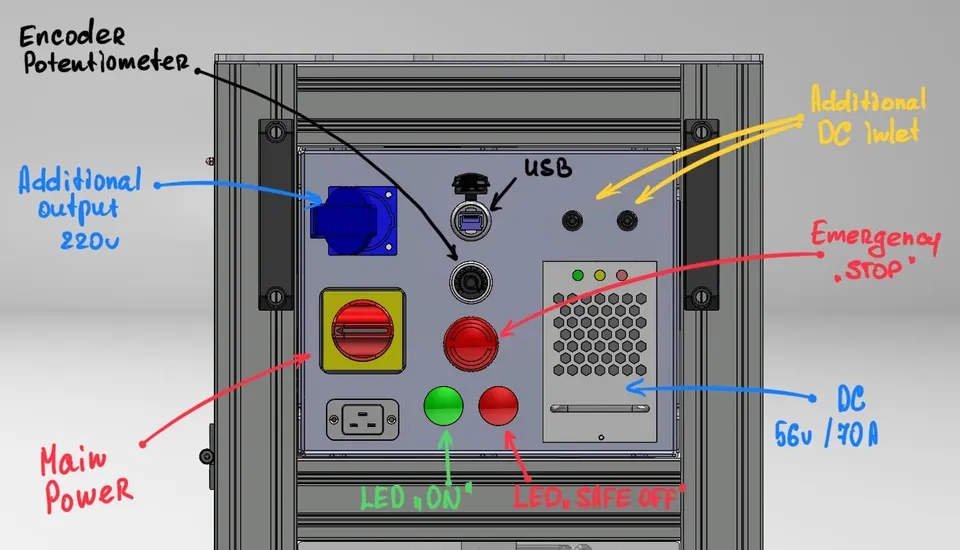
A standard bench meets a general safety baseline. When your standard is stricter, a custom build lets you specify the exact safety architecture and documentation your auditor will ask for. Retrofitting that onto a catalog unit later is slow and rarely clean.
Takeaway: go custom when your power envelope, your protocols, or your compliance needs sit outside the standard, not just to have something bespoke.
Cost and Lead-Time Trade-offs
The trade-off between the two paths is easy to state and easy to get wrong. Off-the-shelf wins on up-front price and ships fast. Custom costs more at order time and takes longer to build, but it fits. The mistake is judging only the sticker price. A bench that almost fits has a hidden cost: the engineer hours you spend working around it, every test, for years.
The table below compares the two on the factors that actually decide the outcome. For a full breakdown of what drives the price of a bench, a dedicated cost guide goes deeper than we can here.
| Factor | Off-the-shelf | Custom / built-to-spec |
|---|---|---|
| Up-front cost | Lower, fixed list price | Higher, scoped to your spec |
| Lead-time | Short, ships from a known config | Longer, design and build time |
| Fit to requirements | Good only if your motor sits in the envelope | Built around your motors, voltages, and protocols |
| Upgradability | Limited, tied to the fixed frame | Designed with headroom and room to extend |
| Risk | Hidden cost if your needs drift outside the envelope | Needs a partner who actually customizes |
The right reading of this table is not “custom is better.” It is that the cheaper-looking option is only cheaper when your requirements are standard and stay standard. The more your motors vary, or the more your roadmap moves, the more the fit and upgradability columns decide the total cost.
Takeaway: compare total cost over the life of the bench, not the price on the order, because rigidity is paid in engineer hours.
A Middle Path: Configurable Platforms
You do not always have to choose between a fixed catalog box and a clean-sheet design. A configurable platform sits in the middle. It starts from a proven base, then lets you set the parts that matter for your motors: the dyno, the sensors, the power range, the protocol, and the report.
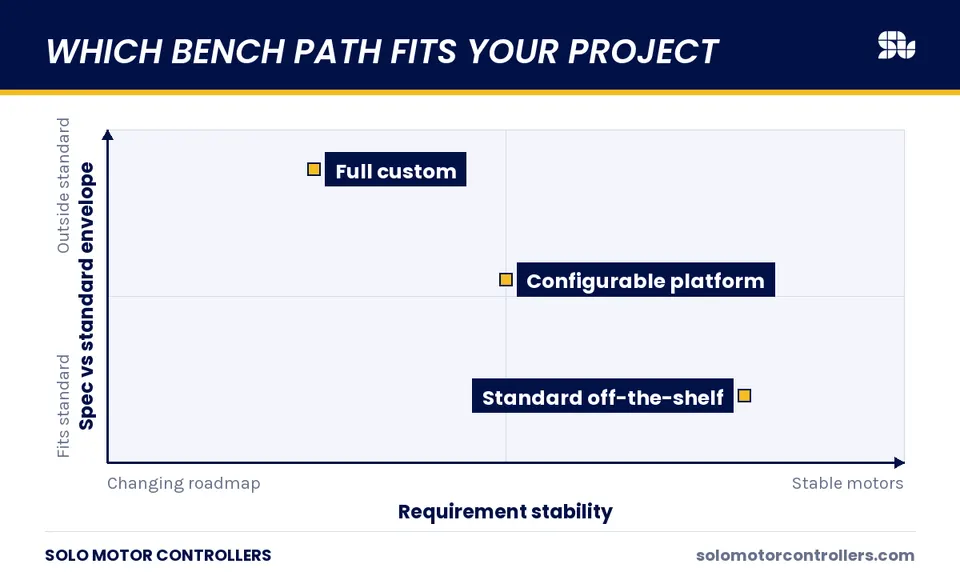
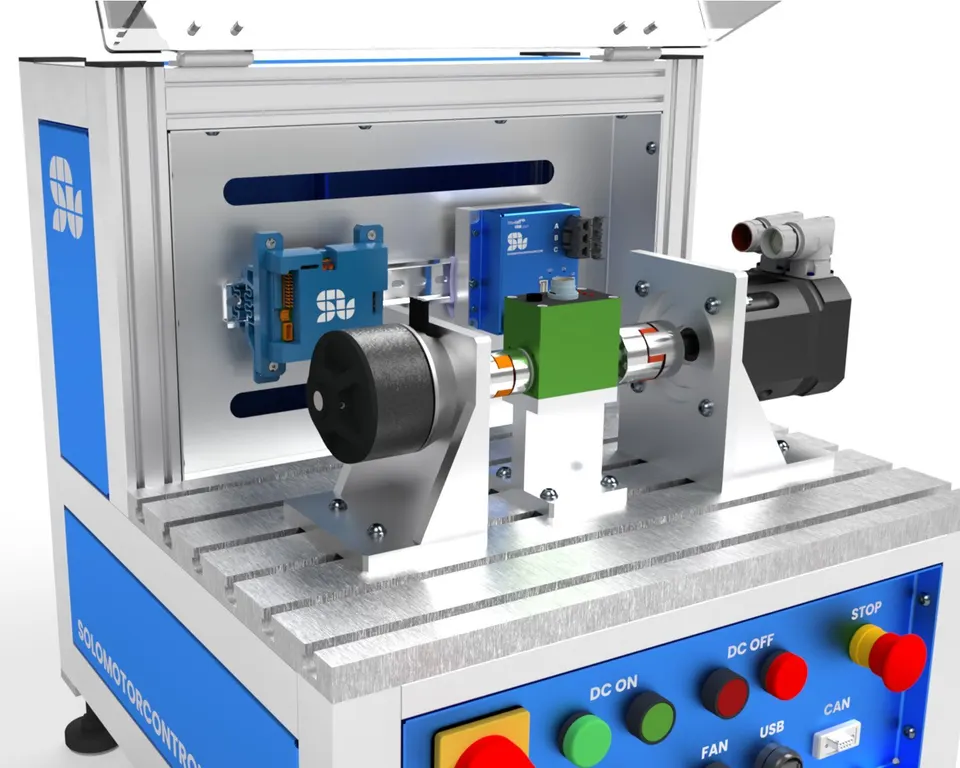
This path lowers the risk of full-custom. You are not paying to invent a bench from scratch, so the cost and lead-time stay closer to a standard unit. You are also not stuck inside a fixed envelope, so a motor near the edge still fits. A modular base also makes later changes easier. When your next motor needs a different sensor or a higher voltage, you adjust a module instead of buying a new bench.
Takeaway: a configurable platform gives most of the fit of custom with much less of its cost and risk.
Pros, Cons & Trade-offs
No single path is best for every team. Here are the honest trade-offs of each, so you can match the choice to how standard, and how stable, your requirements are.
| Path | Pros | Cons | Best when |
|---|---|---|---|
| Off-the-shelf | Fast, lower up-front cost, known config | Fixed power, voltage, and protocol envelope; rigid if your needs drift | Your motors sit dead center in the standard range |
| Configurable platform | Fits your motors at the parts that matter, easier to extend later | Costs more than a pure catalog unit | Your needs are near the edge or your roadmap keeps moving |
| Full custom | Built exactly to your spec, including safety and compliance | Highest cost and longest lead-time | Power, protocol, or compliance needs are clearly outside the standard |
The common and expensive mistake is buying a standard bench that almost fits, then spending engineer time patching the gap for years. If your motors are unusual, or your roadmap keeps changing, a bench you can configure or customize usually costs less over its life than a rigid one you outgrow.
Takeaway: pick off-the-shelf for standard and stable needs, and a configurable or custom bench when fit and upgradability decide the real cost.
How SOLO Covers Standard and Custom Benches
At SOLO we build motor test benches on the same controllers we make, and we customize them at any level, from the dyno and sensors to the protocols and the report. If your motors fit a standard configuration, you get a clean catalog bench. If they do not, we adjust the parts that matter instead of asking you to design around a fixed frame.
That flexibility covers a wide range on one platform. The benches support DC, BLDC, PMSM, and AC induction motors, with active or brake loading, torque and temperature sensing, and automated logging over CANopen or EtherCAT. The aim is simple: a bench that fits your motors, not one you have to work around. You can see the current SOLO motor test bench and send us your specs.
Conclusion
Once you have decided to buy, the choice is standard versus custom, and it turns on one thing: how close your requirements sit to the off-the-shelf envelope. A catalog bench is fast and cheaper up front, and a good call when your motor, voltage, and protocol land inside the fixed range. The moment a requirement steps outside, that same bench gets rigid, and the gap is paid in engineer hours for years. A custom or configurable bench fits your motors, voltages, and protocols, and it upgrades as your roadmap moves. Judge total cost over the life of the bench, not the price on the order. If you want a second opinion on a spec, the SOLO test bench page is a good next step, and our team can review your requirements against both paths.
FAQ
Is a custom test bench worth it?
It depends on how standard your needs are. If your motor sits inside a catalog bench’s power, voltage, and protocol range, an off-the-shelf unit is usually the better value. A custom bench is worth it when your envelope, your automation, or your compliance needs fall outside the standard, because the hidden cost of working around a rigid bench generally outweighs its lower sticker price over the life of the rig.
Can I upgrade an off-the-shelf bench later?
Sometimes, but only within the frame it was built on. A fixed catalog bench has a set power stage, dyno, and sensor set, so a big jump in voltage or torque often means a new bench, not an upgrade. A configurable platform is designed with headroom and modular parts, so you can change a sensor, raise the power range, or add a protocol without replacing the whole unit.
What is the difference between a custom and a configurable bench?
A configurable bench starts from a proven base and lets you set key options like the dyno, sensors, power range, and protocol. A full custom bench is designed from your spec, which suits unusual power levels or strict safety and compliance requirements. Configurable keeps cost and lead-time closer to a standard unit, while full custom gives the exact build at a higher price and longer wait.
Does a custom bench take much longer to deliver?
Generally yes, because design and build add time that a ready-made config does not need. A configurable platform usually lands between the two, since it adapts a known base instead of starting from scratch. If your motors fit a standard configuration, you keep the short lead-time of an off-the-shelf bench while still tuning the parts that matter, like the portable vs stationary form factor.
Tags:CustomOff-the-shelfTest Bench
Products in this article
Related articles

Efficiency Mapping a Motor: Method and What It Reveals
How to build a motor efficiency map on a test bench: the measurement method, the torque-speed grid, and what the map reveals about a motor.
E-Bike Motor and Controller Validation Bench
How to validate an e-bike motor and controller on a bench: torque and cadence, assist profiles, regen and the metrics that matter for e-bikes.

Robotics Actuator Testing: Validating Motors for Robots
How to validate motors and actuators for robots on a test bench: torque density, backlash, repeatability and the metrics that matter for robotics.
