
In-House Motor Testing ROI: When a Test Bench Pays Off
Introduction
One outsourced motor characterization is far from free, and it carries a few days of waiting on top. Run enough of them in a year and you can spend more than a small test bench costs. That single comparison is what motor testing ROI comes down to.
This article gives you a simple way to decide. We compare the cost of outsourcing each test against the cost of owning and operating your own bench, then find the break-even point. The goal is not to sell you a bench. It is to tell you when an in-house bench actually pays off, and when it does not.
To be clear about scope: “in-house” here means owning and operating a bench you bought, not building one from scratch. Building a full bench yourself is a separate decision, and rarely the right one, for reasons we touch on near the end.
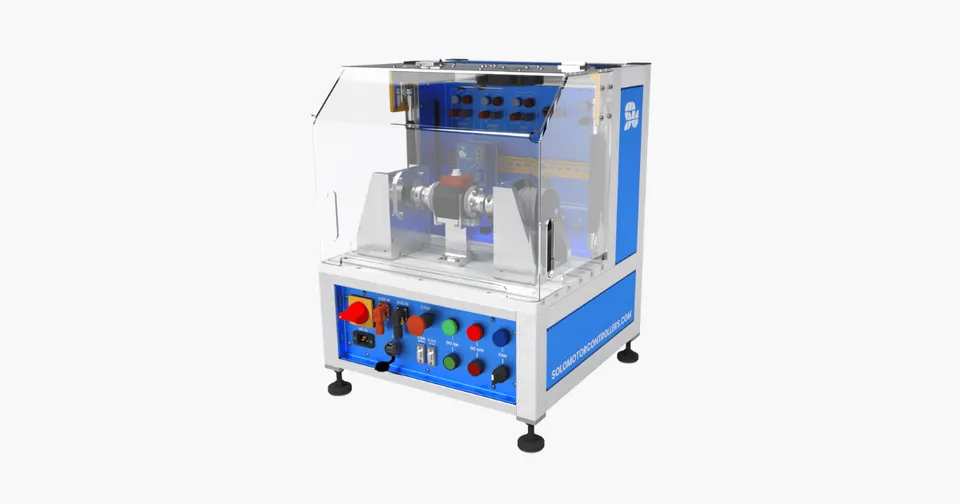
The Cost of Outsourcing Motor Testing
Outsourcing looks cheap on the first invoice. You pay per test, you own no equipment, and someone else runs the lab. For a handful of tests a year, that math works.
The cost shows up once testing becomes part of how you build. A full characterization, an efficiency map, or a thermal endurance run is rarely a flat fee. You pay for setup, for machine time, and often for the report. A single detailed test is a meaningful line item on its own, and a multi-day endurance campaign costs far more.
Then there is the part that never appears on the invoice:
- Lead time. Booking a slot, shipping the motor, and waiting for results often takes one to three weeks. Every design iteration waits on that loop.
- Iteration drag. When a result raises a new question, you queue again. Three quick “what if” runs in your own lab become three more external bookings.
- External dependency. Their schedule, their priorities, their backlog. A busy lab can stall your release.
- IP exposure. Your motor, your control firmware, and your test data leave the building. For a novel design, that is a real risk.
Takeaway: outsourcing is cheap per test at low volume, but the price per useful answer climbs fast once you test often.
The Cost of In-House Testing
Owning a bench flips the cost structure. You pay most of it once, then each test is nearly free. To compare honestly, split the cost into capex and opex.
Capex is the bench itself. A capable bench with an active dyno, torque and temperature sensing, and automated logging is a real capital outlay that rises with power and features. Treat it as an asset you depreciate over its life, usually five to seven years.
Opex is what it costs to run, and this is the part people forget:
- Engineer time to set up fixtures, run sequences, and read results. Automated logging cuts this a lot, but it is not zero.
- Calibration of the torque sensor and instruments, generally once a year.
- Maintenance: couplings, bearings, and the occasional spare.
- Floor space and power for the bench in your lab.
The honest number is the fully loaded cost per test, capex spread across the tests you actually run, plus opex. Run the bench twice a year and that number is brutal. Run it weekly and it drops toward the cost of an engineer’s afternoon. Utilization is the whole game.
Takeaway: in-house testing trades a large one-time capex for a near-zero marginal cost per test. The more you test, the better that trade looks.
A Simple Payback Model
Here is the model in one table, with the absolute numbers left to you. Call C the yearly cost of owning the bench (capex spread over its life, plus yearly opex) and p your price per outsourced test. Outsourcing costs p × tests; owning costs C, mostly fixed. The two cross at C ÷ p tests a year. The table shows the pattern in multiples of your own break-even.
| Tests per year | Outsource cost/year | In-house cost/year | Cheaper option |
|---|---|---|---|
| Half your break-even | ~0.5 × C | ~C | Outsource |
| At your break-even | ~C | ~C | About even |
| 2× your break-even | ~2 × C | ~C | In-house |
| 4× your break-even | ~4 × C | ~C | In-house |
| 8× your break-even | ~8 × C | ~C | In-house, by far |
The break-even is simply C ÷ p: the yearly cost of owning divided by the price of one outsourced test. Below it, outsourcing usually wins. Above it, the bench pays for itself, and the gap widens every year because capex is already sunk.
Two adjustments make the picture more honest. First, an in-house test is not truly free, but once you own the bench it costs only opex, well below an outsourced test, so a fair model counts only that opex per test above the fixed yearly cost. Second, your break-even moves with your real price per outsourced test: the more expensive each outsourced test, the fewer you need before owning wins. The single most useful thing you can do is plug in your cost per test and your test count.
A quick way to find your own break-even:
> Break-even tests per year ≈ (yearly cost of owning the bench) ÷ (cost per outsourced test)
Takeaway: for most teams that test more than once or twice a month, an in-house bench pays back inside its first year.

Beyond ROI: Speed, IP and Control
The payback table only counts euros. Three things it cannot price often matter more.
Speed to data. An in-house bench turns a one to three week external loop into an afternoon. When you can run a test the same hour you have the question, you iterate faster and ship sooner. For a team on a tight release, that time-to-data is worth more than the per-test saving.
IP protection. Your motor design, your firmware tuning, and your raw test data stay inside your walls. For a novel drivetrain or a controller you are still refining, keeping that data in-house is a risk decision, not just a cost one.
Process control. You set the test conditions, the limits, and the report format. You can re-run the exact same sequence next quarter and trust the comparison. An outside lab gives you their method and their format, which may not match how you make decisions.
Think of these as risk management, not luxuries. A bench that prevents one field return, or one missed thermal problem before launch, can cover a large part of its cost in a single save. If you want the basics of what a bench measures first, see our overview of an electric motor test bench.
Takeaway: ROI is the floor of the argument, not the ceiling. Speed, IP, and control often decide it.
When Outsourcing Still Wins
In-house is not always right, and pretending otherwise would be dishonest. Outsourcing is the better call when:
- You test rarely. A few characterizations a year sit below break-even. Paying per test is simply cheaper.
- It is a one-time need. A single certification run or a one-off validation does not justify buying an asset you will not use again.
- You need a capability you will rarely use. Some specialized tests, like certain safety or compliance measurements, are better rented than owned.
- You have no space, time, or staff. A bench that nobody runs has terrible ROI. Utilization is everything.
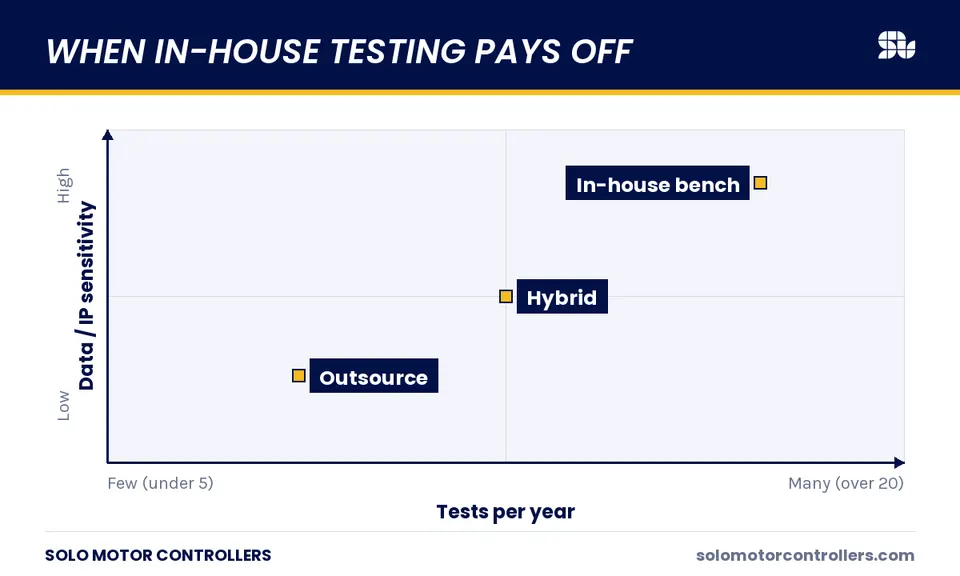
The deciding factors are test frequency and how much you value owning the data. Low frequency and low IP sensitivity point to outsourcing. High frequency or high IP sensitivity point in-house.
Takeaway: if you cannot keep a bench reasonably busy, outsource without guilt.
Pros, Cons & Trade-offs
No single path is right for everyone. The table balances the two honest options, owning a bench versus paying per test.
| Path | Pros | Cons | Best when |
|---|---|---|---|
| In-house bench (own and operate) | Near-zero cost per test, fast iteration, data and IP stay in-house, full control of method | Large up-front capex, ongoing opex, needs space and a person to run it | You test often and value speed and IP |
| Outsource per test | No capex, no maintenance, access to specialized rigs | High cost per test, lead time, external dependency, IP leaves the building | Low or occasional volume, one-off needs |
The common mistake is treating this as all-or-nothing. Many teams run a hybrid: a bench in-house for daily characterization and endurance work, and an outside lab for the rare specialized or accredited test. That keeps your bench busy on the high-volume work, where ROI is strong, and rents the rest.
A note on a third path some teams consider: building a bench from scratch. It looks like the cheapest option on paper, but it needs motor control, analysis, mechanical, and reporting skills together, and the engineer time alone usually erases the saving. For most teams the real choice is owning a ready bench versus outsourcing, not building.
How SOLO Helps You Bring Testing In-House
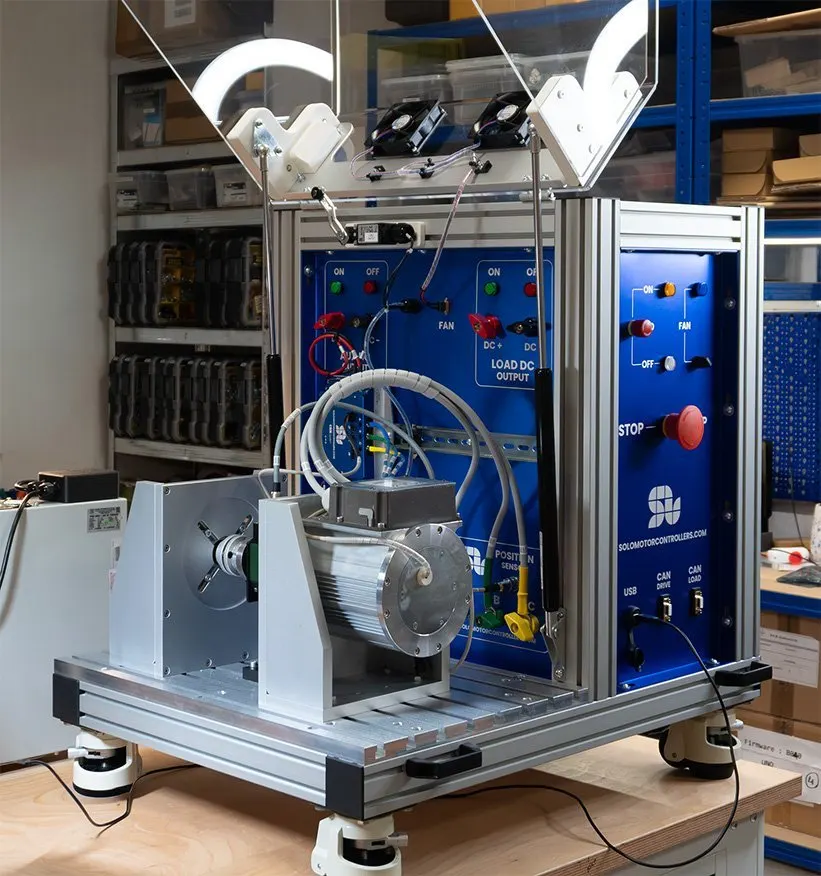
Bringing testing in-house is mostly a payback question, and a ready bench shortens that payback. SOLO provides motor test benches built around the same controllers we make, so the bench arrives configured rather than half-finished. That supports a faster start: less integration time means less opex burning against your capex while you wait to be productive.
The benches handle DC, BLDC, PMSM, and AC induction motors on one frame, with active or brake loading, torque and temperature sensing, and automated logging over CANopen or EtherCAT. Automated, unattended runs are the lever that pushes your cost per test down toward the floor, which is exactly what moves your break-even in your favor. We also customize the dyno, sensors, and protocols to your motors, so the bench fits your roadmap instead of capping it. You can see the current SOLO motor test bench and tell us your test volume, and we can help you sketch the payback.
Conclusion
Motor testing ROI comes down to one comparison: the cost per outsourced test against the cost of owning a bench you keep busy. The break-even is just the yearly cost of owning divided by the price of one outsourced test, and it drops fast when outsourced tests are expensive. Below that, outsourcing usually wins. Above it, an in-house bench pays back inside its first year and keeps saving after that. Plug your cost per test and your test count into the simple formula above, then weigh the parts the table cannot price: speed to data, IP protection, and process control. If owning looks right, the SOLO test bench page is a good next step, and our team can review your numbers.
FAQ
When is a motor test bench worth buying?
A bench is generally worth buying once you test often enough to clear the break-even point — the yearly cost of owning divided by your price per outsourced test. It is also worth buying when speed to data matters for your release, or when keeping your motor and test data in-house protects valuable IP. If you test rarely or have a one-off need, outsourcing is usually cheaper.
How do you calculate test bench ROI?
Start with the yearly cost of owning the bench: capex spread over its life, usually five to seven years, plus yearly opex like calibration, maintenance, and engineer time. Then take your cost per outsourced test times your tests per year. The bench pays off when the outsourced total passes the yearly cost of owning. A fast estimate of break-even is the yearly cost of owning divided by the cost per outsourced test.
Is it cheaper to outsource or test in-house?
It depends on volume. Outsourcing is cheaper at low test counts because you pay nothing up front. In-house is cheaper at higher counts because each test is nearly free once you own the bench. The crossover is your break-even point, and it moves with how expensive each outsourced test is.
Does in-house testing mean building my own bench?
No. In-house means owning and operating a bench you bought, not building one from scratch. Building requires motor control, analysis, mechanical, and reporting skills all at once, and the engineer time usually erases the saving. For most teams, the practical choice is buying a ready bench versus outsourcing.
Tags:Motor TestingROITest Bench
Products in this article
Related articles
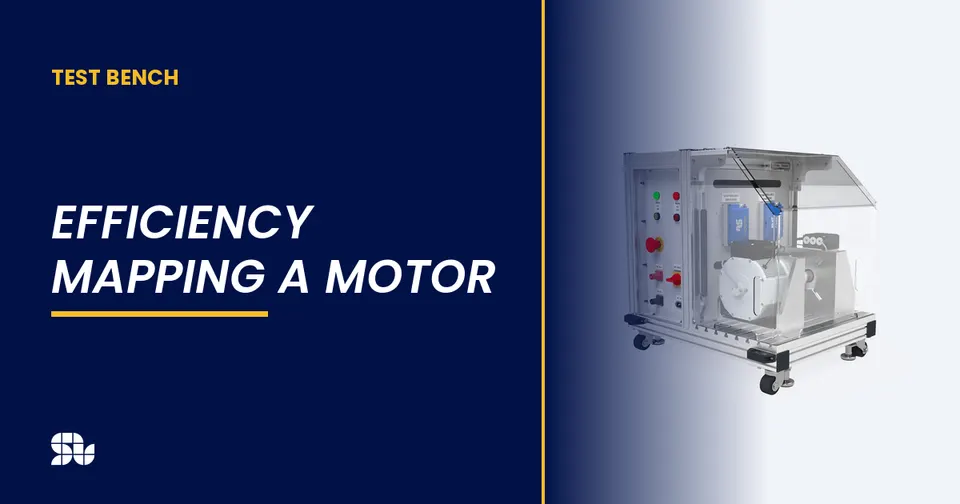
Efficiency Mapping a Motor: Method and What It Reveals
How to build a motor efficiency map on a test bench: the measurement method, the torque-speed grid, and what the map reveals about a motor.
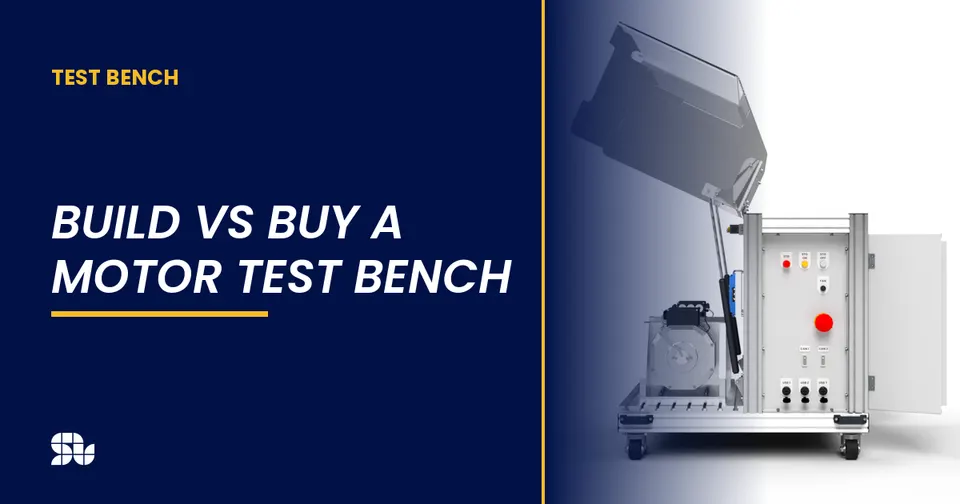
Build vs Buy a Motor Test Bench: Total Cost and ROI
Should you build a motor test bench in-house or buy one? A total-cost-of-ownership comparison covering time, risk, calibration and ROI.
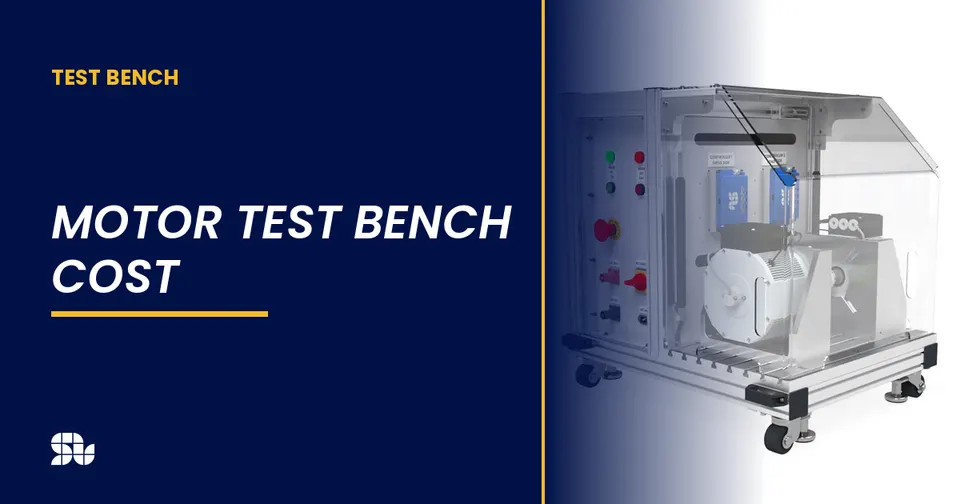
Motor Test Bench Cost: What Drives the Price
What a motor test bench costs and why: power range, dyno type, sensors, automation and safety. A transparent breakdown of what moves the price.
