
Dynamometer Selection: Active vs Passive vs Hysteresis
Introduction
The dynamometer is one part of a test bench, yet it decides most of what you can measure. Pick the wrong type and a third of your planned tests become impossible, no matter how good the sensors and software are.
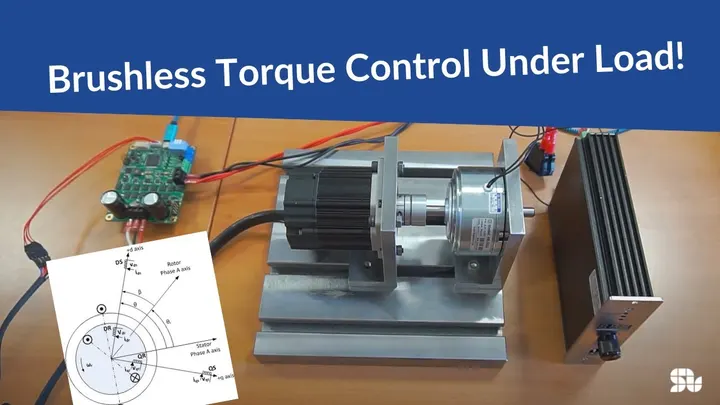
A dynamometer, or dyno, applies and absorbs load so you can map a motor under real working conditions. There are three families to choose from: active, passive, and hysteresis brakes. This guide compares them on torque, speed, regeneration, dynamic response, and cost, so you can match the dyno to the tests you actually run.
What a Dynamometer Does on a Test Bench
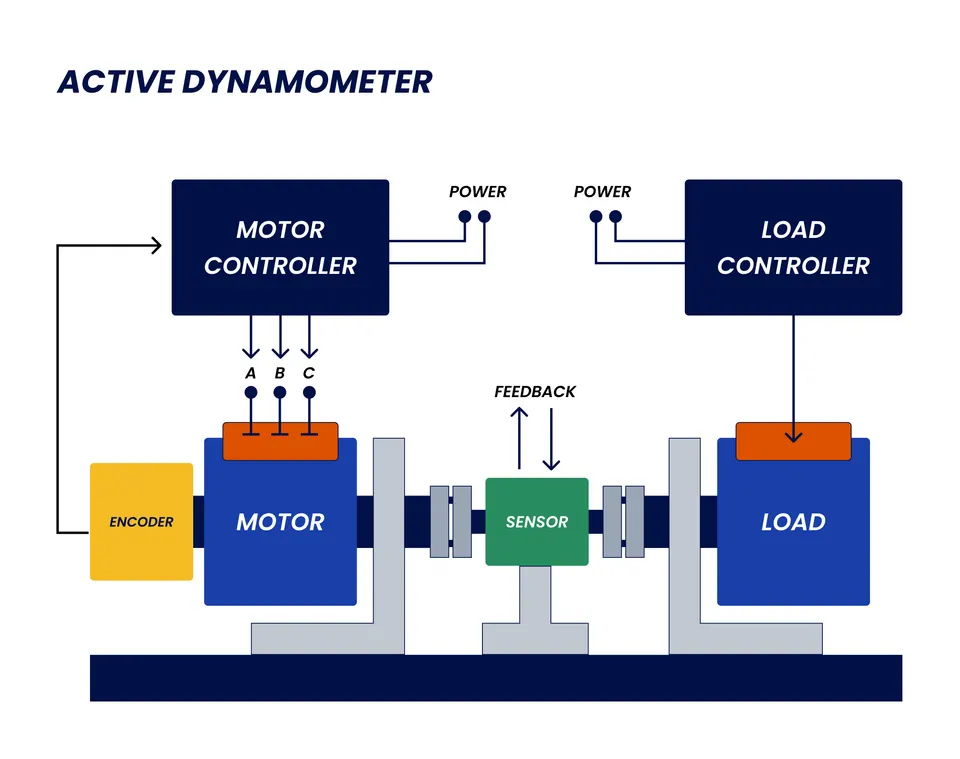
A dynamometer is the load on the bench. It couples to the shaft of the motor under test and either resists or drives it, while sensors record torque and speed. By changing the load in a controlled way, you can hold a steady operating point or sweep the motor across its full torque and speed range.
That is the whole job: turn an uncontrolled spin into a repeatable measurement. The motor sees a real load instead of free air, so the numbers you read match how it will behave in the field. The dyno type sets the limits of what that load can do, which is why this choice comes before sensors and software.
Takeaway: the dyno is the load, and its type decides which tests are even possible.
Active Dynamometers
An active dynamometer uses a second motor as the load. That load motor can absorb power, like a brake, but it can also drive the shaft. This is four-quadrant operation, meaning the dyno controls torque in both directions at any speed, positive or negative.
Because it can drive the shaft, an active dyno simulates a real drive cycle. It can pull the motor under test, push it, and recover energy during braking, which is how you test regeneration. You can replay an EV duty cycle, a robot arm move, or a wind-up and stall, all on the same setup. The cost is higher, since you are buying and controlling a second motor and drive, but no other type matches the flexibility.
Use an active dyno when you need full motor mapping, regen testing, or dynamic load profiles. For the deeper trade-off, see active dyno in test benches.
Passive Dynamometers
A passive dynamometer can only absorb power. It is a brake, so it resists motion but never drives the shaft. Common types are eddy-current brakes and water brakes, which turn the motor’s output into heat that the dyno dissipates.
Passive dynos are simpler and cheaper than active ones, and they handle high power well. They suit steady-state load points and endurance runs, where you hold the motor at a fixed torque and speed for a long time. The limit is clear: a brake cannot back-drive the motor, so it cannot test regeneration or replay a full four-quadrant drive cycle. Many eddy-current brakes also lose holding torque near zero speed, which makes low-speed work harder.
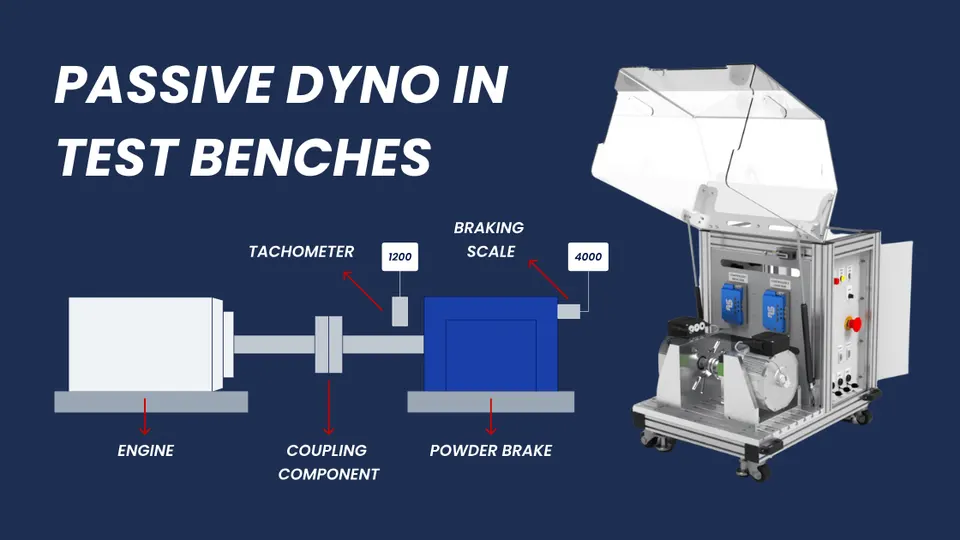
Use a passive dyno when your tests are mostly fixed load points and you want lower cost at high power. See passive dyno in test benches for the full picture.
Hysteresis and Magnetic Powder Brakes
Hysteresis brakes and magnetic powder brakes are a special class of passive load, built for fine torque control. A hysteresis brake creates torque through a magnetic field with no physical contact, so it sets a smooth, repeatable torque even at zero speed. A magnetic powder brake uses fine magnetic particles between rotor and stator, which gives high torque in a small frame.
The big advantage is controllable torque at low and zero speed. You set the brake current, and the torque follows, independent of speed across most of the range. That makes these brakes ideal for low-speed torque testing, cogging checks, and tension control. Hysteresis brakes run contact-free, so they have little wear and stay accurate over time. Powder brakes wear a little with use and have a speed limit, since the powder heats up at high RPM.
Use a hysteresis or powder brake when you need precise torque at low speed and clean, repeatable results. More detail in magnetic powder brakes in test benches.
Takeaway: for fine torque control near zero speed, a hysteresis or powder brake beats both other types.
Side-by-Side Comparison
Here are the three families against the choices that matter. Read the row that matches the test you run most.
| Dyno type | Can drive the shaft | Regen | Torque / speed range | Dynamic response | Relative cost | Best use case |
|---|---|---|---|---|---|---|
| Active (motor) | Yes, four-quadrant | Yes | Wide, low to high speed | Fast | High | Full mapping, regen, drive cycles |
| Passive (brake) | No, absorbs only | No | High power, weak near zero speed | Medium | Low to medium | Steady load points, endurance |
| Hysteresis | No, absorbs only | No | Controllable down to zero speed | Medium | Medium | Low-speed and fine torque control |
| Magnetic powder | No, absorbs only | No | High torque, limited top speed | Medium | Medium | High torque in a small frame |
The pattern is simple. Only an active dyno drives and regenerates. Brakes are cheaper and absorb only. Hysteresis and powder brakes trade top speed for clean torque control near zero.
How to Choose for Your Application
Match to Your Power/Torque Envelope
Start with numbers. Write down the peak and continuous torque, the maximum speed in RPM, and the power of every motor you plan to test. The dyno has to cover the largest of these with headroom, around 20% on torque and speed, so it is not running at its limit. A dyno sized only for your biggest motor will also measure your smallest one poorly, because torque resolution drops at the bottom of the range. If your motors span a wide range, that resolution gap matters as much as the top end.
Static Load vs Drive-Cycle Loading
Now ask how the load behaves over time. Static loading holds a fixed torque or speed, which is all you need for efficiency points, thermal soak, and endurance. A passive brake or a hysteresis brake handles this well and costs less. Drive-cycle loading changes the load fast, the way a real application does. An EV motor sees acceleration, cruise, and regen braking in seconds, and a drone motor sees rapid thrust changes. Only an active dyno can replay that profile and recover energy during the braking phases. If your tests are mostly steady points, a brake is enough. If they follow a real duty cycle with regen, you need an active dyno.
Budget and Bench Cost Impact
The dyno is often the single biggest driver of bench cost. An active dyno adds a second motor, a second drive, and the control to coordinate them, so it can multiply the price of the load section compared to a simple brake. A passive or hysteresis brake keeps the cost down, which is why steady-state benches are cheaper. The honest way to choose is to let the tests decide. Do not pay for four-quadrant capability you will never use, and do not buy a brake that blocks the regen test your roadmap needs next year.
Takeaway: size to your biggest motor, match the dyno to static or drive-cycle loading, then let cost confirm the choice.
How SOLO Picks the Dyno for Each Bench
At SOLO we pick the dyno around your tests, not the other way around. We support active, passive, and hysteresis loading on the same bench architecture, so the load matches your real duty cycle instead of forcing you to adapt. If you need four-quadrant mapping and regen, we build around an active dyno running on our own controllers. If you run steady load points or need fine torque near zero speed, we fit a brake that suits the budget. Because the bench is customized to your needs at any level, the dyno, sensors, and protocols follow your motors. You can see the current SOLO motor test bench and tell us what you test.
Conclusion
Three dyno types cover almost every bench. An active dyno drives and absorbs, so it handles full mapping, regen, and drive cycles, at the highest cost. A passive brake absorbs only and suits steady load points and endurance at lower cost. A hysteresis or powder brake gives controllable torque down to zero speed, which is the right tool for low-speed and fine torque work. Match the type to your torque and speed envelope and to whether your loading is static or follows a real drive cycle. If you want a second opinion on which dyno fits your motors, the SOLO test bench page is a good next step.
FAQ
What is the difference between an active and a passive dyno?
An active dyno uses a second motor that can both absorb and drive the motor under test, so it supports four-quadrant operation and regeneration tests. A passive dyno is a brake that can only absorb load. Active is more flexible and replays full drive cycles, passive is simpler and cheaper for fixed load points.
When should I use a hysteresis brake?
Use a hysteresis brake when you need precise, repeatable torque at low or zero speed. It sets torque from the brake current, almost independent of speed, and it runs contact-free with little wear. That makes it a good fit for low-speed torque testing, cogging checks, and tension control.
Which dyno type is best for low-speed torque testing?
A hysteresis brake is usually the best choice for low-speed torque. It holds a controllable torque down to zero speed, where eddy-current brakes lose their grip. A magnetic powder brake also works well at low speed and gives high torque in a small frame, with a lower top-speed limit.
Does the dyno choice affect the bench cost a lot?
Yes. The dyno is often the biggest single cost in the bench. An active dyno adds a second motor and drive, so it costs much more than a passive or hysteresis brake. Choosing the simplest dyno that still covers your tests is the easiest way to keep the bench affordable.
Tags:DynamometerSelectionTest Bench
Products in this article
Related articles
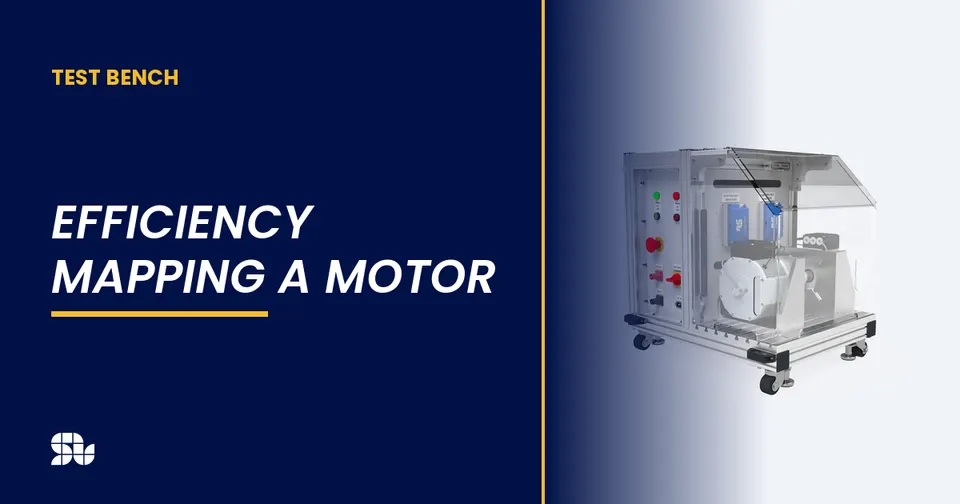
Efficiency Mapping a Motor: Method and What It Reveals
How to build a motor efficiency map on a test bench: the measurement method, the torque-speed grid, and what the map reveals about a motor.
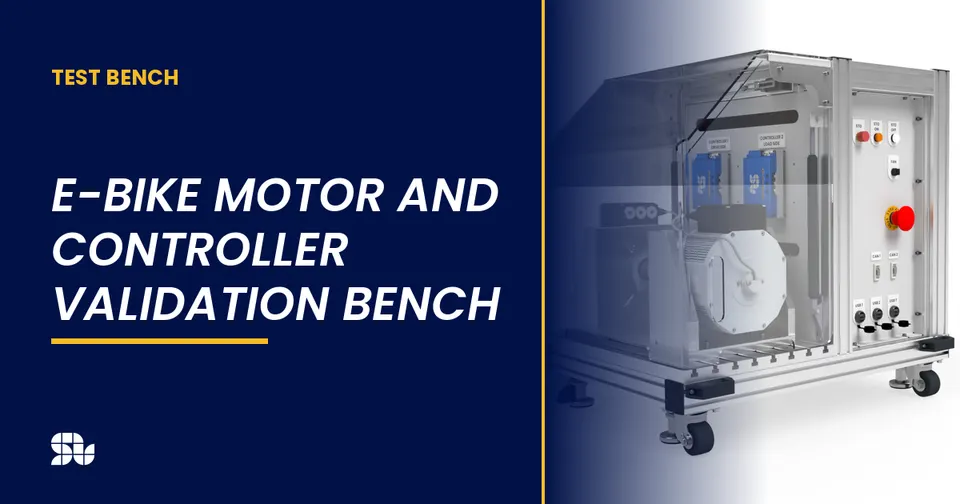
E-Bike Motor and Controller Validation Bench
How to validate an e-bike motor and controller on a bench: torque and cadence, assist profiles, regen and the metrics that matter for e-bikes.
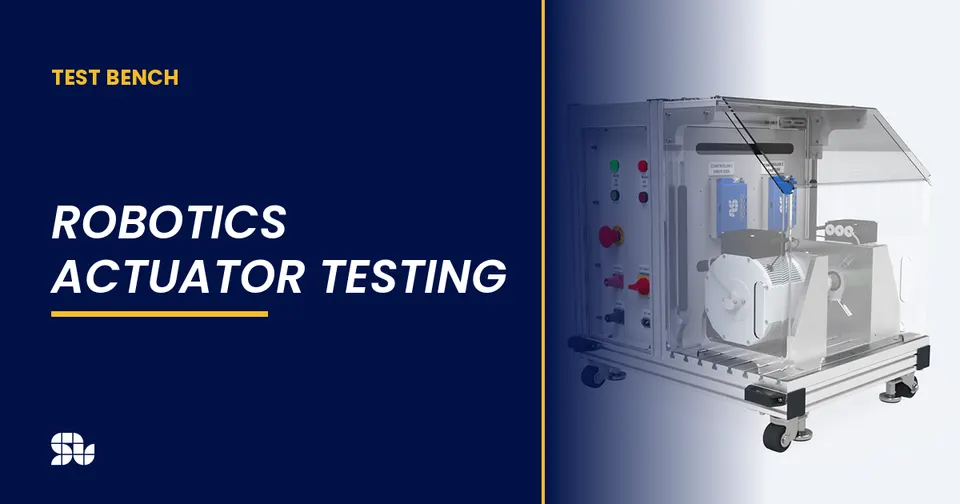
Robotics Actuator Testing: Validating Motors for Robots
How to validate motors and actuators for robots on a test bench: torque density, backlash, repeatability and the metrics that matter for robotics.
