
Motor Test Bench Cost: What Drives the Price
Introduction
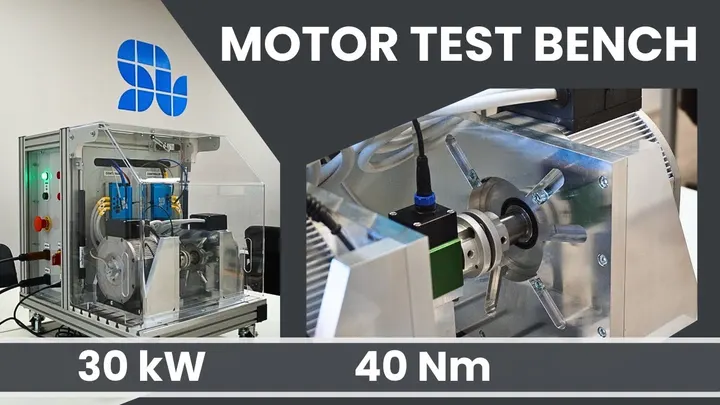
A motor test bench can range from a compact desktop unit to a high-power industrial system, and the price between them is often an order of magnitude apart. That spread confuses most buyers the first time they ask for a quote. Two benches that look similar in a photo can sit at opposite ends of it.
The price is not random. It tracks a few clear drivers: the power you need to absorb, the type of dyno, the sensors and their accuracy, the automation software, and the safety and cooling around it. This guide breaks down what you are actually paying for, so you can read a quote and know where the money goes.
What You Are Actually Paying For
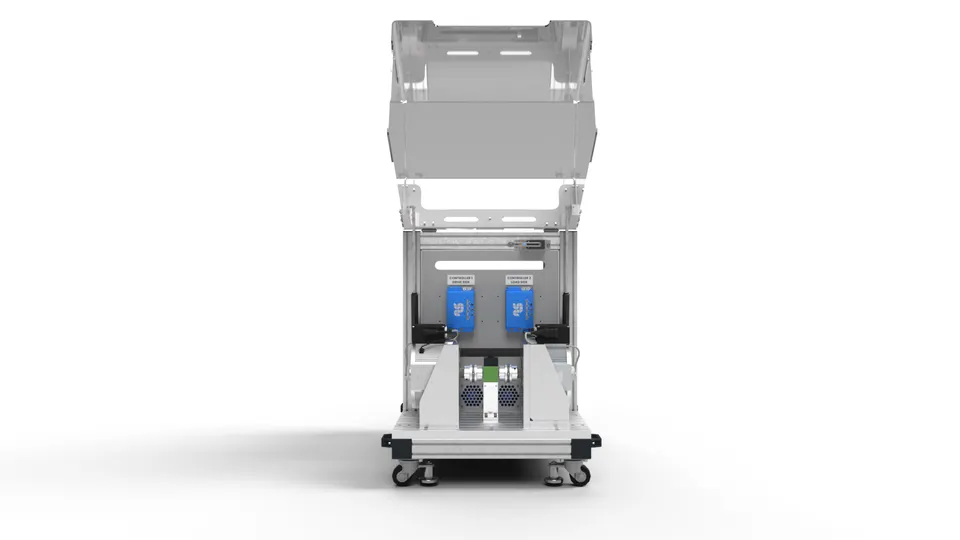
A test bench is a system, not a single part. The quote bundles mechanics, power electronics, sensors, software, and safety into one number. Five drivers move that number the most. Understand them and that wide range stops looking arbitrary.
Power, Torque and Speed Range
This is the biggest cost driver. The bench has to absorb the full output of the motor under test, so a 500 W actuator and a 50 kW traction motor live in different price worlds. Higher power means a bigger load machine, heavier mechanics, larger power electronics, and more cooling.
Two numbers set the floor: peak torque in Nm and maximum speed in RPM. A bench rated for 8 Nm at 5000 RPM is far cheaper than one rated for 200 Nm at 12000 RPM. High speed is its own cost, because it forces precision balancing, better bearings, and stronger guarding.
Takeaway: size to your largest planned motor, with some headroom, and you control the single biggest line on the quote.
Dyno Type and Load Capacity
The dynamometer, or dyno, is the load that resists the motor. Its type changes both what you can test and what you pay. A simple brake costs less than a full motoring dyno that can drive the shaft back.
| Dyno type | What it does | Relative cost |
|---|---|---|
| Passive brake (eddy-current, powder) | Absorbs load only | Lower |
| Hysteresis / powder | Smooth, controllable braking | Medium |
| Active (motoring) | Absorbs and back-drives, four-quadrant | Higher |
An active dyno is the most capable and the most expensive, because it is a second controlled motor with its own drive and regeneration path. You need it for regen tests and full efficiency maps. A passive brake is enough for steady load points and endurance. For a small, low-cost option built on our own controllers, see the mini motor dyno using SOLO.
Sensors and Measurement Accuracy
Your results are only as good as your sensors, and accuracy is not free. A precise torque transducer can be one of the costliest single parts on the bench. The same is true for high-bandwidth current and voltage sensing.
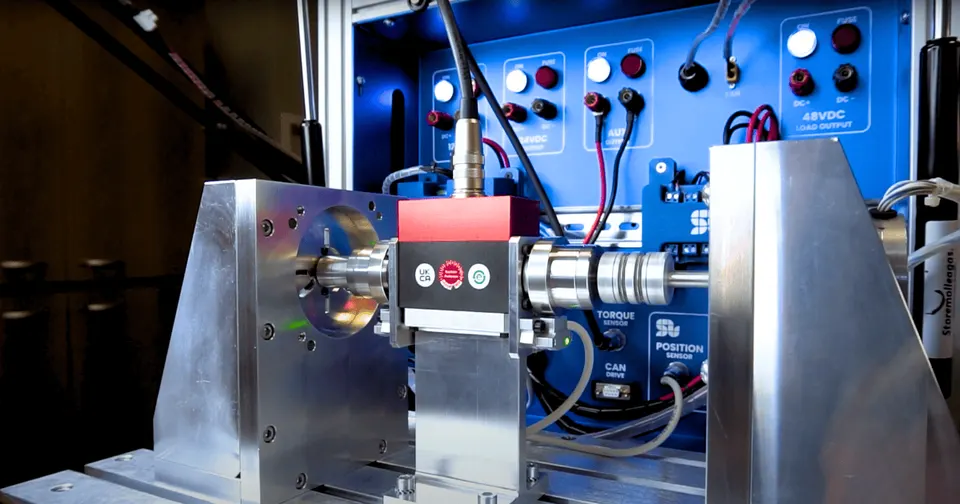
Accuracy class drives the price. A torque sensor at 0.1% of full scale costs far more than one at 0.5%, and it must be sized to your smallest torque, not just your largest. Add speed and position feedback plus temperature probes and the sensor suite alone can shift a quote by a wide margin. More on this in our guide to the torquemeter in test benches.
Takeaway: pay for the accuracy your data needs, not the highest class on the catalog.
Automation, Software and Protocols
Software is where benches quietly split into a tool and a toy. A live dial that you read by hand is cheap. A system that runs automated test sequences, logs every channel, and applies pass/fail limits costs more, and it usually pays for itself in engineer hours.
What raises the software cost: scripted test profiles, time-stamped data logging with export, configurable limits, and fieldbus support like CANopen or EtherCAT so the bench fits an industrial line. The ability to run an unattended endurance test overnight is a real feature, not a checkbox, and it has a real price.
Safety, Enclosure and Cooling
A spinning motor stores energy, so the parts that contain it are part of the cost. A proper enclosure with interlocked guarding, a hard emergency stop, over-speed and over-temperature cutoffs, and a way to dump regenerated energy all add to the bill.
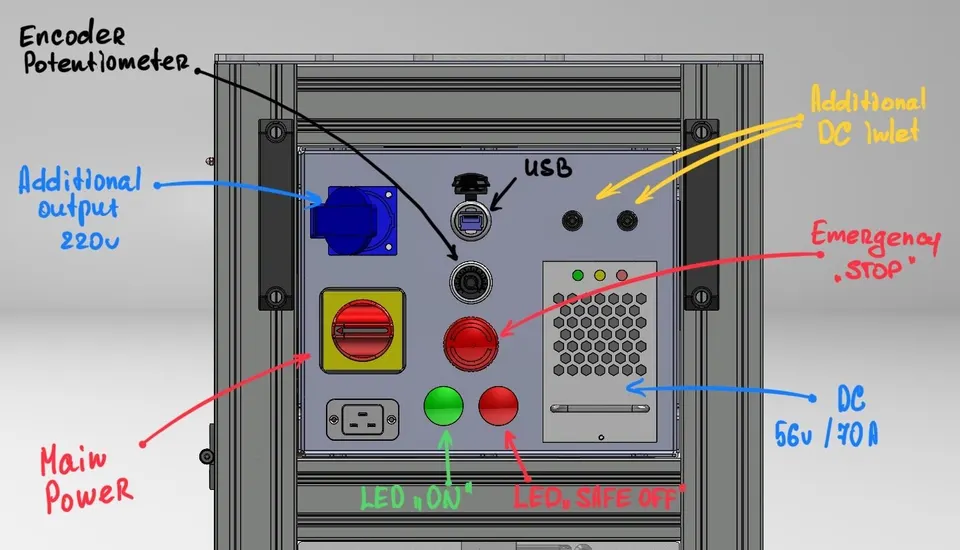
Cooling scales with power. Low-power benches shed heat passively. High-power benches need forced air, sometimes liquid cooling and a braking resistor bank to absorb regenerated energy. Thermal capacity matters most for long runs, which is why endurance work often pushes the cooling spec. See how this plays out in our look at the thermal stress test bench.
Takeaway: safety and cooling are not optional extras, they scale with power and they belong in your budget from the start.
Cost Tiers: Desktop, Lab, Industrial
It helps to think in three tiers. The table below is indicative, not a price list, because the final number depends on the exact spec. It shows what each tier typically includes and where it usually lands.
| Tier | Typical power | What you usually get | Relative cost |
|---|---|---|---|
| Desktop / compact | Up to ~1 kW | Brake or small active load, basic sensors, single-motor, manual or light automation | € |
| Lab | ~1–15 kW | Active dyno, accurate torque sensor, automated sequences, logging, fieldbus | €€ |
| Industrial | 15 kW and up | High-power active dyno, full sensor suite, enclosure and cooling, line integration, end-of-line automation | €€€ |
A desktop bench fits a single team validating small actuators or drone motors. A lab bench suits R&D groups mapping efficiency and running endurance. An industrial bench supports production, high power, and end-of-line testing where uptime and integration drive the cost.
Takeaway: pick the tier by your power and test needs first, and the price band follows.
Hidden Costs to Plan For
The sticker price is not the total cost. A few line items are easy to forget at quote time and harder to ignore later.
- Calibration: torque and power sensors need periodic calibration to stay traceable. Budget for it yearly, not once.
- Integration: wiring the bench into your power supply, network, and software environment takes time and sometimes a tailored adapter.
- Fixturing and adapters: each new motor may need a coupling, a bracket, or a custom mount.
- Maintenance: bearings, couplings, and brake elements wear. Spares and service keep the bench running.
- Training: an engineer who knows the software gets clean data faster. Onboarding is a real, if small, cost.
Takeaway: think in total cost of ownership, not just the purchase price. The extras are modest next to the bench, but they are real.
Pros, Cons & Trade-offs
The core trade-off is between a fixed, standard bench and one built to your spec. A cheaper standard bench can cost more over its life if your motor sits outside its envelope. The table keeps it balanced.
| Approach | Pros | Cons | Reality |
|---|---|---|---|
| Standard, low-power bench | Lowest up-front price, fast to get | Fixed power, voltage and protocol envelope; rigid if your motor changes | Fine only if your motors fit the standard window |
| Higher-spec standard bench | More headroom and features | You pay for capability you may not use; still a fixed envelope | Safer headroom, but watch for paying for unused range |
| Customizable (built to spec) | Matches your motors, voltages and protocols at any level | Needs a partner who actually customizes; scoped, not off-the-shelf | Often the lower total cost when requirements vary |
No approach wins for everyone. The common and costly mistake is buying a standard bench that almost fits, then spending engineer time working around its limits for years. A bench you can match to your motors usually costs less over its life than a rigid one you outgrow. If you only need to test on the move or share a unit across teams, a portable electric motor test bench can change the math.
How SOLO Helps You Scope the Cost
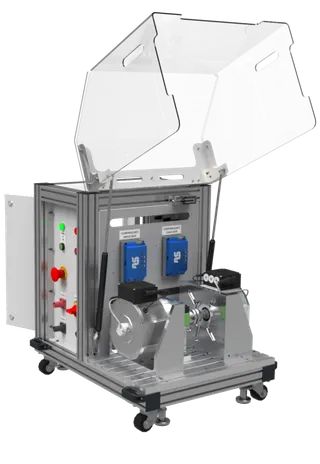
At SOLO we help you scope a bench to the right tier instead of guessing at it. We start from your motors, your power and speed range, your sensor accuracy, and the protocols you run, then build a bench that covers those needs without padding the spec with capability you will not use. Because we customize at any level, from the dyno and sensors to the report and the fieldbus, you avoid both ends of the waste curve: a rigid bench you outgrow, and an oversized one you overpay for. We support DC, BLDC, PMSM, and AC induction motors on one bench, with active or brake loading and automated logging. You can see the current SOLO motor test bench and send us your specs for a scoped quote.
Conclusion
Motor test bench cost spans more than an order of magnitude, and the spread is driven by five things: power range, dyno type, sensor accuracy, automation software, and safety with cooling. Pick the tier that matches your power and your tests, then plan for the hidden costs of calibration, integration, and maintenance so the total stays predictable. The biggest budget risk is not the sticker price. It is buying a standard bench that almost fits and paying for the workaround later. If you want a transparent breakdown for your own motors, the SOLO test bench page is a good next step.
FAQ
Why do motor test benches vary so much in price?
The main reason is power. Absorbing 50 kW needs far bigger mechanics, electronics, and cooling than 500 W. On top of that, the dyno type, sensor accuracy class, automation software, and safety and cooling all move the number. A simple brake-loaded desktop bench and a high-power active dyno with full sensing are different machines, which is why prices span more than an order of magnitude.
What is the cheapest way to get a motor test bench?
A compact, brake-loaded bench with basic sensors and light automation is the lowest-cost entry. It works well for small motors and steady load points. Just check that its fixed power, voltage, and protocol envelope actually covers your motors. The cheapest bench is a poor deal if you outgrow it in a year and have to buy again.
Is a custom test bench more expensive than off-the-shelf?
Not necessarily. A customizable bench is scoped to your exact needs, so you do not pay for unused range, and you do not waste engineer time working around a fixed envelope. An off-the-shelf bench can look cheaper up front, then cost more over its life if your motor sits outside its limits. Compare on total cost of ownership, not just the purchase price.
Tags:CostMotor TestingTest Bench
Products in this article
Related articles
Efficiency Mapping a Motor: Method and What It Reveals
How to build a motor efficiency map on a test bench: the measurement method, the torque-speed grid, and what the map reveals about a motor.
In-House Motor Testing ROI: When a Test Bench Pays Off
When does an in-house motor test bench pay for itself versus outsourcing? A simple ROI and payback model for motor testing.
How to Choose a Motor Test Bench: A Buyer’s Guide (7 Criteria)
A practical buyer's guide to choosing a motor test bench: the 7 criteria that decide power range, dyno type, sensors, safety, software and cost.
